
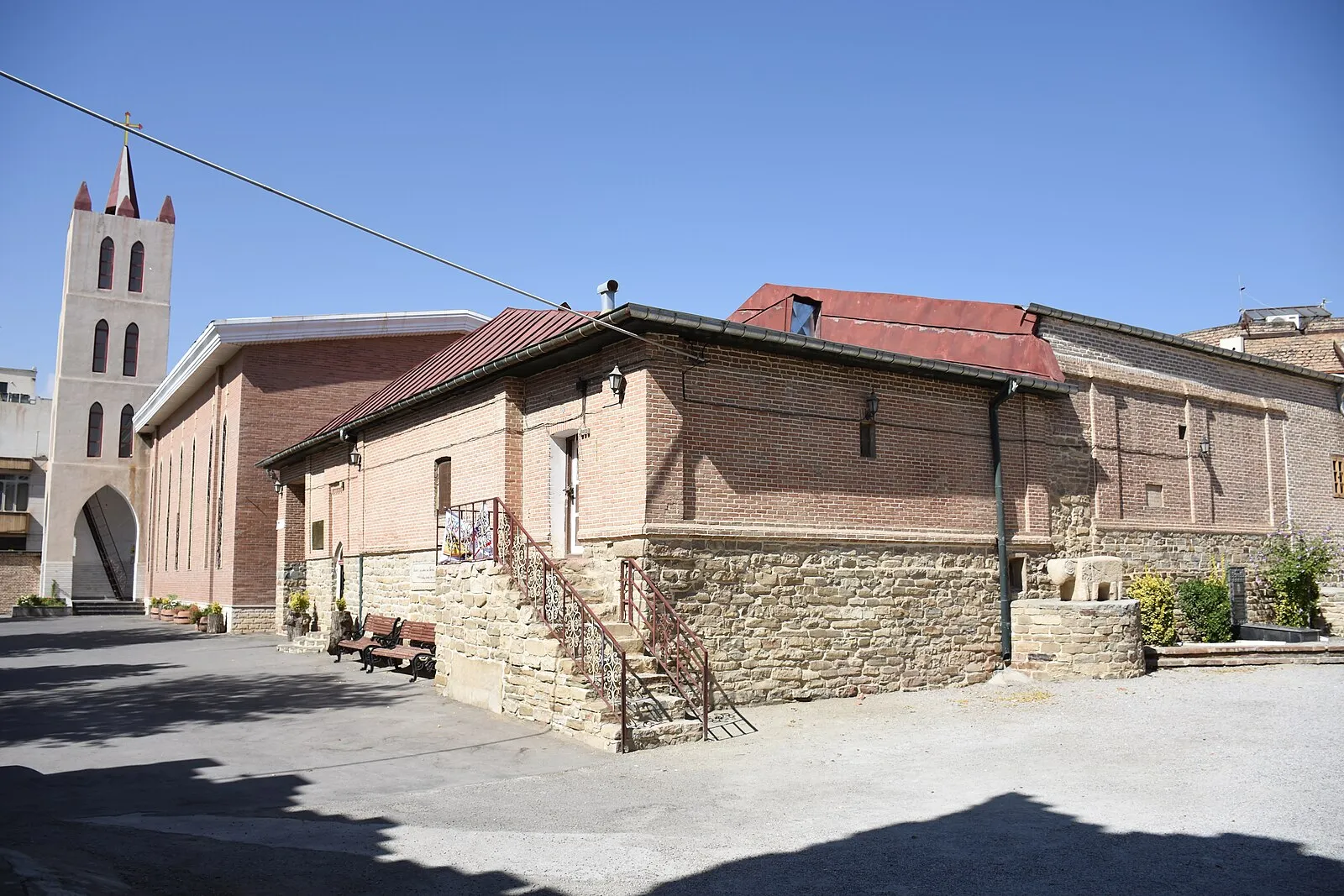
Cost of Living inUrmia, Iran
Purchasing Power vs. United States
Based on GDP per capita (PPP). Iran: $17,484/capita.
How Far Your Money Goes
Prices are 78% lower than the global benchmark (New York City = 100).
Using the country-level NYC comparison for now. We do not have a defensible city-level aggregate cost index for this city yet.
Income Category
Happiness
4.9 / 10
#98 globally
GDP per Capita
City Population
Child Education
Public-school quality, expat access, instruction language, and homeschool legality for relocating families.
Public schools
Public-schooling rules are set nationally for Iran; Urmia-specific enrollment notes are still being verified.
Quality
Mixed public-school option
Expat access
Usually not practical for expats
not practicalInstruction
Persian
Language fit is more manageable.
PISA / outcomes
Qualitative only
Using curated quality notes for now.
Why this quality rating
Iran's public system is structured for local families, but it is not an easy public-school choice for relocating expat households.
Why the expat-access rating looks like this
Even where resident enrollment is possible, Persian-medium instruction and day-to-day local integration make the public route usually impractical for foreign families.
🚫 Homeschooling
Homeschooling not permittedIran requires compulsory school attendance and does not permit homeschooling. Education is heavily regulated by the Ministry of Education with a mandatory national curriculum. No exemptions for homeschooling on philosophical or lifestyle grounds.
Homeschool legality in Iran — check current regulations before committing.
Source: User-curated family relocation research (initial seed) (2026-04-14)
Childcare & Domestic Help
Estimate-only country fallback for the family-support costs we track in Iran.
Full-time nanny (5 days)
$350-$550
Estimate-only country fallback
Live-in / 24-7 nanny
$650-$925
Estimate-only country fallback
Source: curated family relocation research(derived country fallback)
Getting Around
Neighborhood mobility profiles are rolling out city by city.Urmia is still missing a verified walkability, transit, airport, and rideshare profile.
Healthcare
System strength, outcome signals, facility coverage, and self-pay visibility in Iran.
Method: country metrics come from public system indicators, facility coverage reflects mapped providers we can inventory, direct pricing only reflects observed self-pay pages, and relative care cost can fall back to broad cost-of-living healthcare indices. Sparse pricing does not imply sparse healthcare availability.
Healthcare system
MixedGood national coverage and maternal mortality is low help, but households still pay a large share themselves.
Public care
LimitedBroad public coverage help, but patients still shoulder a meaningful share of costs.
Private care
LimitedThe tracked private-style network still looks thin and self-pay pricing transparency is still sparse weigh on this rating.
UHC coverage
81/100
2023
Physicians
1.81/1k
2023
Hospital beds
1.85/1k
2019
Out of pocket
43%
2023
Outcome signals
Life expectancy
77.9 yrs
2024
Maternal mortality
16/100k
2023
Neonatal mortality
7.2/1k
2024
International patient readiness
LimitedPrice transparency is still sparse weigh on this rating.
Pricing transparency
LimitedPublished self-pay prices are scarce and few facilities expose web pages we can verify weigh on this rating.
Facility coverage
Self-pay pricing visibility
No verified self-pay prices are published for the tracked facilities in Iran yet.
This usually reflects low online price transparency rather than a lack of healthcare providers.
Notable facilities
System metrics: World Bank WDI · Updated 2026-09-01
Safety & Governance
Street Safety
Source: Numbeo where a city row is matched; otherwise World Bank WGI and country-level safety context.
Political Stability
World Bank WGI scale: -2.5 to +2.5.
Wages by Sector
| Sector | Median |
|---|---|
| Administrative & Support Services | — |
| Agriculture & Farming | — |
| Arts, Entertainment & Recreation | — |
| Construction | — |
| Education | — |
| Finance & Insurance | — |
| Healthcare & Social Work | — |
| Hospitality & Food Service | — |
| Information & Technology | — |
| Manufacturing | — |
| Mining & Quarrying | — |
| Other Services | — |
| Professional & Scientific Services | — |
| Public Administration & Defence | — |
| Real Estate | — |
| Retail & Wholesale Trade | — |
| Transport & Logistics | — |
| Utilities | — |
2024 annual wages in Urmia, Iran · Source: GDP-derived estimate (national)
Price Comparison vs. US
Visa Information (US passport)
Short-stay entry
US passport holders need advance travel authorization or a visa before entry.
Quick comparison FAQ
Structured from the deltas already shown on this page — no invented facts, no extra data sources.
How far does your money go in Urmia compared with the US?
Your money goes about 18.2x further in Urmia than in the US, based on the current PPP estimate. We are using the country-level cost index for Iran here because a defensible city-level aggregate index is not available yet.
Is Urmia cheaper or more expensive overall than New York City?
Urmia is cheaper overall than New York City — overall living costs are about 78% cheaper than the global benchmark (New York City) for Urmia. We are using the country-level cost index for Iran here because a defensible city-level aggregate index is not available yet.
How does rent in Urmia compare with New York City?
Rent in Urmia is about 93% cheaper than the global benchmark (New York City). We are using the country-level cost index for Iran here because a defensible city-level aggregate index is not available yet.
How expensive are groceries and restaurants in Urmia?
Groceries in Urmia are about 79% cheaper than the global benchmark (New York City), and restaurant prices are about 85% cheaper than the same benchmark. We are using the country-level cost index for Iran here because a defensible city-level aggregate index is not available yet.
About Urmia
Urmia (Orumiyeh) is the capital of West Azerbaijan province in northwestern Iran, the same city of roughly 577,000 on the eastern shore of Lake Urmia near the Turkish and Iraqi borders. The settlement sits in a fertile mountain-ringed plain that produces a substantial share of Iran's apples, grapes, and sugar beets, supported by food processing, textiles, and a regional university. The population is predominantly ethnic Azerbaijani Turk with significant Kurdish and Christian Assyrian minorities, and the city has historically been one of Iran's most religiously and ethnically diverse urban centers. The climate is continental with cold winters that bring snow and warm, dry summers. Azerbaijani Turkish, Persian, and Kurdish are all widely used in different contexts. Relocators should weigh sanctions-era constraints on banking and outbound flights through Tehran, the well-documented ecological contraction of the lake itself, sporadic border-region tensions, and minimal Western expat infrastructure outside the capital.
See the full breakdown — free
No password needed. Takes ~30 seconds.
More cities in Iran
Cities with a similar cost of living
Comparable to Urmia — worth a look if you're weighing alternatives.