
Tripoli International School
BritishInternational
Fee not published
Confirmed on its own website
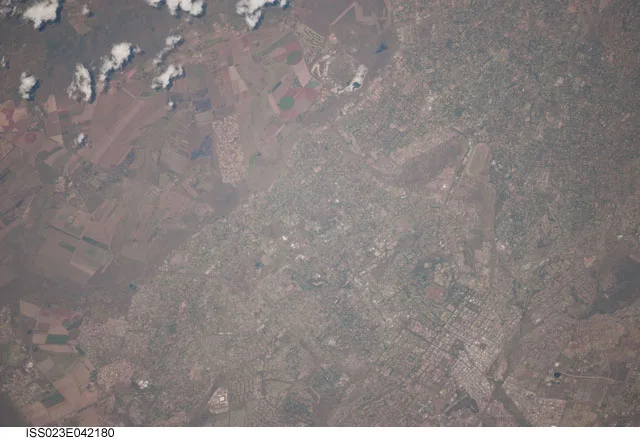
Image credit: NASA Astronauts
Based on GDP per capita (PPP). Libya: $14,118/capita.
Prices are 81% lower than the global benchmark (New York City = 100).
Using the country-level NYC comparison for now. We do not have a defensible city-level aggregate cost index for this city yet.
Income Category
GDP per Capita
City Population
International and private school tuition + curriculum mix for relocating families.
1 confirmed school
2 more suggested by AI, not verified
Confirmed on its own website
Schools' websites are found with Wikidata and OpenStreetMap (© OpenStreetMap contributors), and each is checked on the school's own site.
Nanny, housekeeper, and driver pricing is not yet sourced for Tripoli. We publish this section only when we can tie it to local job-board, agency, or country fallback evidence.
The concrete mobility picture for Tripoli: airport access, urban transit, and rideshare practicality.
Walkability score: 42/100 (car leaning). This is derived from the verified mobility profile and is used by the walkability gate.
Walkability
42/100
mobility profile bus only
Airport
Tripoli international airport access
The refreshed local city data-type matrix lists Tripoli as a missing Libya mobility/walkability row; add conservative first-city coverage through tripoli international airport access instead of leaving the country at zero direct family mobility coverage.
Urban transit
Road-led mobility with central errand access
Daily movement remains road-led, but buses, minibuses, taxis, and central errands provide a conservative non-car baseline until richer city-specific sources land.
Rideshare
Taxi-first mobility
Taxis or arranged rides are the dependable fallback for airport transfers and neighborhoods beyond fixed-route service.
Source: User-curated family relocation research (initial seed) (2026-04-14)
System strength, outcome signals, facility coverage, and self-pay visibility in Libya.
Method: country metrics come from public system indicators, facility coverage reflects mapped providers we can inventory, direct pricing only reflects observed self-pay pages, and relative care cost can fall back to broad cost-of-living healthcare indices. Sparse pricing does not imply sparse healthcare availability.
Solid hospital-bed capacity support this rating.
Strong public funding, relatively low patient cost-sharing, and a visible public hospital footprint support this rating.
A large tracked hospital and clinic network help, but self-pay pricing transparency is still sparse.
UHC coverage
71/100
2023
Physicians
2.04/1k
2017
Hospital beds
3.50/1k
2022
Out of pocket
19%
2023
Life expectancy
71.1 yrs
2024
Maternal mortality
59/100k
2023
Neonatal mortality
5.2/1k
2024
There is visible specialty depth help, but price transparency is still sparse.
Published self-pay prices are scarce weigh on this rating.
No verified self-pay prices are published for the tracked facilities in Libya yet.
This usually reflects low online price transparency rather than a lack of healthcare providers.
System metrics: World Bank WDI · Updated 2026-11-01
Source: Numbeo where a city row is matched; otherwise World Bank WGI and country-level safety context.
World Bank WGI scale: -2.5 to +2.5.
| Sector | Median |
|---|---|
| Administrative & Support Services | — |
| Agriculture & Farming | — |
| Arts, Entertainment & Recreation | — |
| Construction | — |
| Education | — |
| Finance & Insurance | — |
| Healthcare & Social Work | — |
| Hospitality & Food Service | — |
| Information & Technology | — |
| Manufacturing | — |
| Mining & Quarrying | — |
| Other Services | — |
| Professional & Scientific Services | — |
| Public Administration & Defence | — |
| Real Estate | — |
| Retail & Wholesale Trade | — |
| Transport & Logistics | — |
| Utilities | — |
2024 annual wages in Tripoli, Libya · Source: GDP-derived estimate (national)
Short-stay entry
US passport holders need advance travel authorization or a visa before entry.
Structured from the deltas already shown on this page — no invented facts, no extra data sources.
Your money goes about 3.2x further in Tripoli than in the US, based on the current PPP estimate. We are using the country-level cost index for Libya here because a defensible city-level aggregate index is not available yet.
Tripoli is cheaper overall than New York City — overall living costs are about 81% cheaper than the global benchmark (New York City) for Tripoli. We are using the country-level cost index for Libya here because a defensible city-level aggregate index is not available yet.
Rent in Tripoli is about 95% cheaper than the global benchmark (New York City). We are using the country-level cost index for Libya here because a defensible city-level aggregate index is not available yet.
Groceries in Tripoli are about 77% cheaper than the global benchmark (New York City), and restaurant prices are about 89% cheaper than the same benchmark. We are using the country-level cost index for Libya here because a defensible city-level aggregate index is not available yet.
Tripoli is the capital of Libya, a Mediterranean coastal city of about 1.3 million in the country's northwest serving as the seat of the internationally recognized Government of National Unity. As Libya's principal political, financial, and port hub, it concentrates government, oil-export administration, and what remains of the formal corporate economy in a country whose oil wealth is offset by ongoing political fragmentation. Relocators should weigh that Western governments maintain do-not-travel advisories due to persistent armed-group activity, kidnapping risk, and contested governance, making conventional professional relocation impractical; the formal foreign presence is largely limited to oil-services compounds, diplomatic missions, and UN agencies. The climate is hot-summer Mediterranean with mild winters, and Arabic dominates daily life alongside some English and Italian in business.
No password needed. Takes ~30 seconds.
Comparable to Tripoli — worth a look if you're weighing alternatives.