
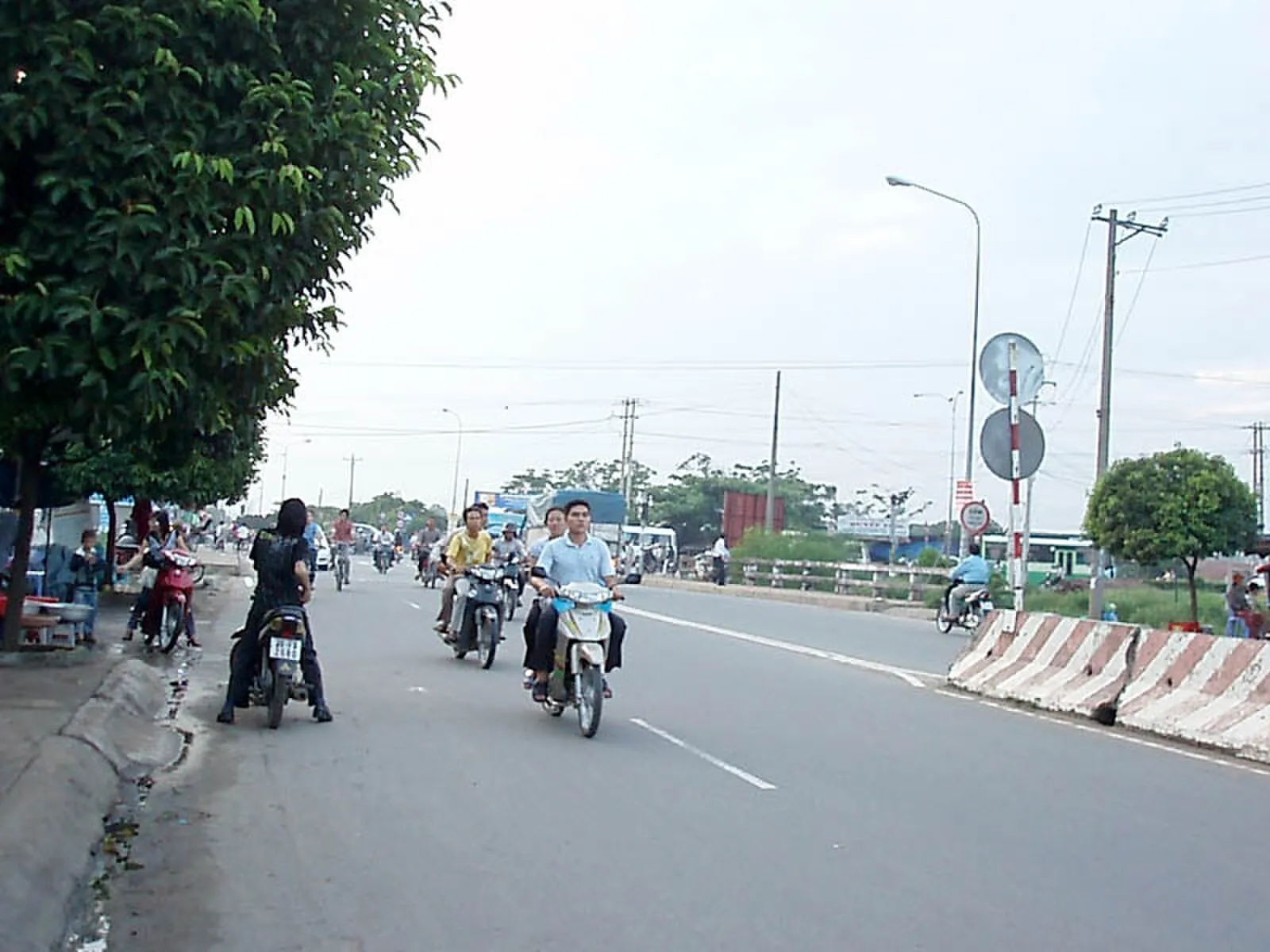
Cost of Living inThuận An, Vietnam
Image credit: TuanUt
Purchasing Power vs. United States
Based on GDP per capita (PPP). Vietnam: $14,415/capita.
How Far Your Money Goes
Prices are 73% lower than the global benchmark (New York City = 100).
Using the country-level NYC comparison for now. We do not have a defensible city-level aggregate cost index for this city yet.
Income Category
Happiness
6.0 / 10
#53 globally
GDP per Capita
City Population
Child Education
Public-school quality, expat access, instruction language, and homeschool legality for relocating families.
Public schools
Public-schooling rules are set nationally for Vietnam; Thuận An-specific enrollment notes are still being verified.
Quality
Limited public-school fit
Expat access
Possible, rarely the expat path
hardInstruction
Vietnamese
Language fit is more manageable.
PISA / outcomes
Qualitative only
Using curated quality notes for now.
Why this quality rating
Vietnam's public system is built for local families and is not the route most expat households choose when they have other options.
Why the expat-access rating looks like this
Resident access can exist, but Vietnamese-medium instruction and a strongly local school culture make the public route a hard fit for most foreign families.
❓ Homeschooling
Not explicitly addressedVietnamese law requires school attendance for citizens, but there is no explicit prohibition or framework for homeschooling. Expat families often homeschool without interference. Vietnamese citizens face more scrutiny. No legal framework exists.
Homeschool legality in Vietnam — check current regulations before committing.
Source: User-curated family relocation research (initial seed) (2026-04-14)
Childcare & Domestic Help
Estimate-only country fallback for the family-support costs we track in Vietnam.
Full-time nanny (5 days)
$280-$680
Estimate-only country fallback
Live-in / 24-7 nanny
$490-$1,150
Estimate-only country fallback
Source: curated family relocation research(derived country fallback)
Getting Around
Neighborhood mobility profiles are rolling out city by city.Thuận An is still missing a verified walkability, transit, airport, and rideshare profile.
Healthcare
System strength, outcome signals, facility coverage, and self-pay visibility in Vietnam.
Method: country metrics come from public system indicators, facility coverage reflects mapped providers we can inventory, direct pricing only reflects observed self-pay pages, and relative care cost can fall back to broad cost-of-living healthcare indices. Sparse pricing does not imply sparse healthcare availability.
Healthcare system
LimitedThis is a broad country-level read based on coverage, staffing, beds, and spending.
Public care
LimitedPublic funding looks lighter and patients still shoulder a meaningful share of costs weigh on this rating.
Private care
LimitedSelf-pay pricing transparency is still sparse weigh on this rating.
UHC coverage
71/100
2023
Physicians
1.11/1k
2021
Hospital beds
2.52/1k
2017
Out of pocket
39%
2023
Outcome signals
Life expectancy
74.7 yrs
2024
Maternal mortality
48/100k
2023
Neonatal mortality
8.8/1k
2024
International patient readiness
LimitedThere is visible specialty depth help, but price transparency is still sparse.
Pricing transparency
LimitedPublished self-pay prices are scarce weigh on this rating.
Facility coverage
Self-pay pricing visibility
No verified self-pay prices are published for the tracked facilities in Vietnam yet.
This usually reflects low online price transparency rather than a lack of healthcare providers.
Notable facilities
System metrics: World Bank WDI · Updated 2026-09-01
Safety & Governance
Street Safety
Source: Numbeo where a city row is matched; otherwise World Bank WGI and country-level safety context.
Political Stability
World Bank WGI scale: -2.5 to +2.5.
Wages by Sector
| Sector | Median |
|---|---|
| Administrative & Support Services | — |
| Agriculture & Farming | — |
| Arts, Entertainment & Recreation | — |
| Construction | — |
| Education | — |
| Finance & Insurance | — |
| Healthcare & Social Work | — |
| Hospitality & Food Service | — |
| Information & Technology | — |
| Manufacturing | — |
| Mining & Quarrying | — |
| Other Services | — |
| Professional & Scientific Services | — |
| Public Administration & Defence | — |
| Real Estate | — |
| Retail & Wholesale Trade | — |
| Transport & Logistics | — |
| Utilities | — |
2024 annual wages in Thuận An, Vietnam · Source: GSO (region-adjusted)
Price Comparison vs. US
Visa Information (US passport)
Short-stay entry
US passport holders need advance travel authorization or a visa before entry.
Quick comparison FAQ
Structured from the deltas already shown on this page — no invented facts, no extra data sources.
How far does your money go in Thuận An compared with the US?
Your money goes about 3.6x further in Thuận An than in the US, based on the current PPP estimate. We are using the country-level cost index for Vietnam here because a defensible city-level aggregate index is not available yet.
Is Thuận An cheaper or more expensive overall than New York City?
Thuận An is cheaper overall than New York City — overall living costs are about 73% cheaper than the global benchmark (New York City) for Thuận An. We are using the country-level cost index for Vietnam here because a defensible city-level aggregate index is not available yet.
How does rent in Thuận An compare with New York City?
Rent in Thuận An is about 90% cheaper than the global benchmark (New York City). We are using the country-level cost index for Vietnam here because a defensible city-level aggregate index is not available yet.
How expensive are groceries and restaurants in Thuận An?
Groceries in Thuận An are about 67% cheaper than the global benchmark (New York City), and restaurant prices are about 84% cheaper than the same benchmark. We are using the country-level cost index for Vietnam here because a defensible city-level aggregate index is not available yet.
About Thuận An
Thuan An is a city in Vietnam's Binh Duong province with roughly 589,000 residents, an industrial satellite immediately north of Ho Chi Minh City along the corridor that links the southern metropolis to the broader Binh Duong manufacturing zone. The economy is dominated by foreign-invested manufacturing across electronics, footwear, garments, and furniture, with substantial Korean, Japanese, and Taiwanese factory presence and the VSIP industrial park serving as an anchor. The climate is tropical with a dry season December through April and a wet season the rest of the year, with year-round high temperatures in the high 20s and 30s Celsius. Vietnamese is essential and English is concentrated in factory-management and HR settings. Relocators should weigh dense factory-worker housing development, traffic congestion on Highway 13 into HCMC, dependence on Tan Son Nhat airport for international flights, and that most expat infrastructure concentrates in central HCMC rather than Thuan An.
See the full breakdown — free
No password needed. Takes ~30 seconds.
More cities in Vietnam
Cities with a similar cost of living
Comparable to Thuận An — worth a look if you're weighing alternatives.