
Green School Bali
Other
Fee not published
Confirmed on its own website
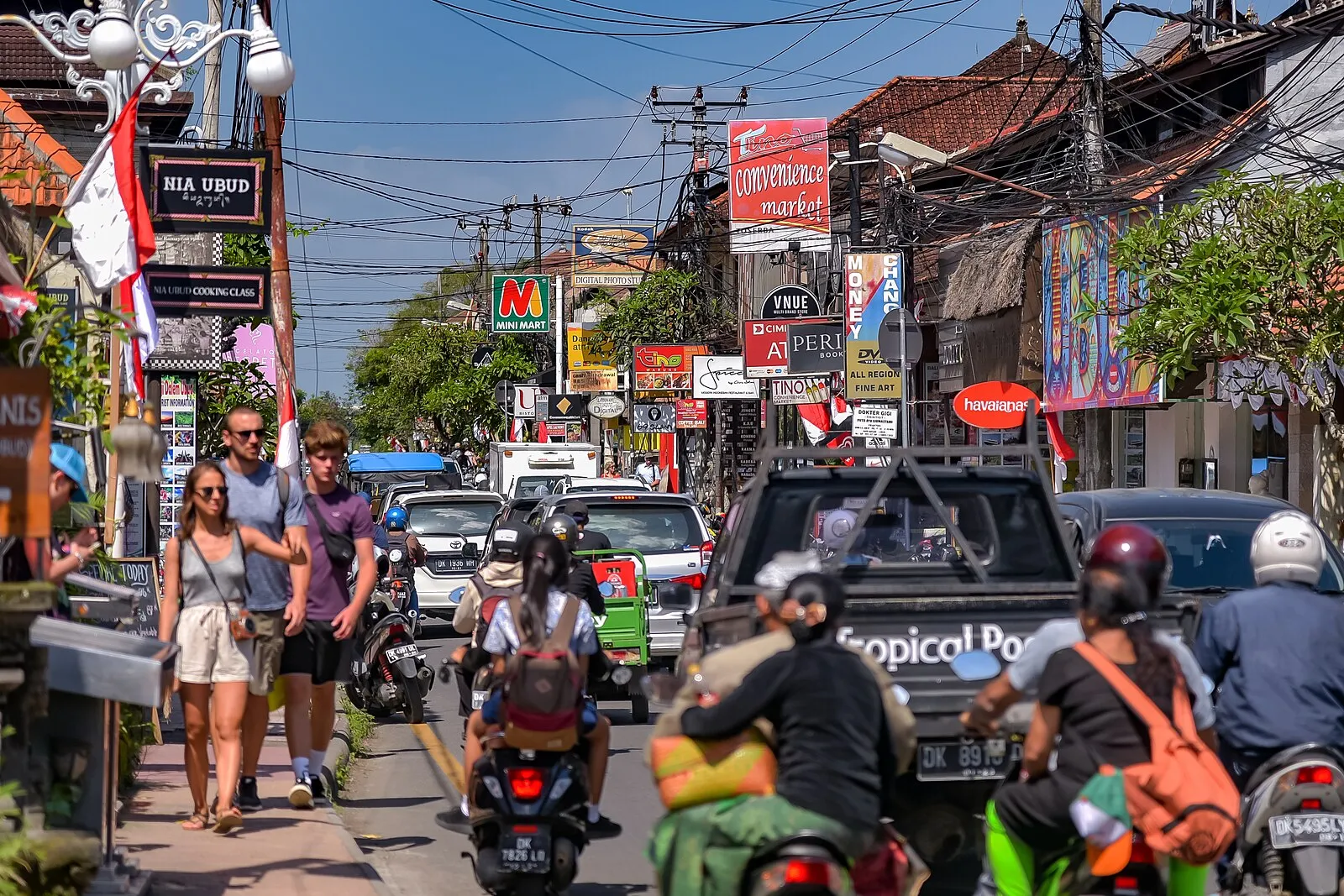
Image credit: chensiyuan
Based on GDP per capita (PPP). Indonesia: $15,091/capita.
Prices are 62% lower than the global benchmark (New York City = 100).
Income Category
GDP per Capita
City Population
Public-school quality + expat access, alongside international and private school cost — the two paths a relocating family weighs.
This describes Indonesia as a whole. Enrollment rules and school quality can vary within the country, so check with schools in Ubud, Bali.
Quality
Limited public-school fit
Expat access
Possible, rarely the expat choice
hardInstruction
Indonesian
Local-language fluency usually matters.
PISA / outcomes
Qualitative only
Using curated quality notes for now.
Indonesia's public system is not the route most expat families choose when they have alternatives.
Resident access may be possible, but Indonesian-medium instruction and uneven quality make the public path a hard sell for foreign families.
Homeschooling is recognized under the Indonesian National Education System. Must register with the local education office. Students can take national exams (Paket A/B/C equivalency exams) to receive official certificates. Growing community in Bali and Jakarta.
Homeschool legality in Indonesia — check current regulations before committing.
Source: User-curated family relocation research (initial seed) (2026-04-14)
2 confirmed schools
Confirmed on its own website
Confirmed on its own website
Schools' websites are found with Wikidata and OpenStreetMap (© OpenStreetMap contributors), and each is checked on the school's own site.
Current nanny and household-help pricing snapshot for Ubud, Bali, Indonesia.
Full-time nanny (5 days)
$450-$650
monthly · confidence 0.65
Live-in / 24-7 nanny
$800-$1,100
monthly · confidence 0.65
Source: curated family relocation research
The concrete mobility picture for Ubud: airport access, urban transit, and rideshare practicality.
Walkability score: 30/100 (walkable core). This is derived from the verified mobility profile and is used by the walkability gate.
Walkability
30/100
mobility profile walkability mention
Airport
International airport access via Denpasar
Ubud relies on the wider Ngurah Rai gateway, which keeps central Bali workable for family travel even though the town itself has no airport.
Urban transit
Shuttle, taxi, and road-based local mobility
Ubud is compact in parts, but everyday mobility is still tourism-oriented and road-led, with shuttles and local road transport doing more work than structured urban transit.
Rideshare
Taxi-first, app-booked rides
Families should expect taxis and app-booked rides to matter more than a deep, especially predictable rideshare layer in the inland Bali corridor.
Source: User-curated family relocation research (initial seed) (2026-04-14)
System strength, outcome signals, facility coverage, and self-pay visibility in Indonesia.
Method: country metrics come from public system indicators, facility coverage reflects mapped providers we can inventory, direct pricing only reflects observed self-pay pages, and relative care cost can fall back to broad cost-of-living healthcare indices. Sparse pricing does not imply sparse healthcare availability.
Doctor staffing is lighter, hospital capacity looks tighter, and maternal outcomes are weaker weigh on this rating.
Country-level outcomes are weaker and the tracked facility mix leans away from public providers weigh on this rating.
A clearly private facility base help, but the tracked private-style network still looks thin and self-pay pricing transparency is still sparse.
UHC coverage
67/100
2023
Physicians
0.52/1k
2023
Hospital beds
1.37/1k
2023
Out of pocket
31%
2023
Life expectancy
71.3 yrs
2024
Maternal mortality
140/100k
2023
Neonatal mortality
9.2/1k
2024
A visible private hospital base help, but price transparency is still sparse.
Published self-pay prices are scarce weigh on this rating.
No verified self-pay prices are published for the tracked facilities in Indonesia yet.
This usually reflects low online price transparency rather than a lack of healthcare providers.
System metrics: World Bank WDI · Updated 2026-11-01
Source: Numbeo where a city row is matched; otherwise World Bank WGI and country-level safety context.
World Bank WGI scale: -2.5 to +2.5.
| Sector | Median |
|---|---|
| Administrative & Support Services | — |
| Agriculture & Farming | — |
| Arts, Entertainment & Recreation | — |
| Construction | — |
| Education | — |
| Finance & Insurance | — |
| Healthcare & Social Work | — |
| Hospitality & Food Service | — |
| Information & Technology | — |
| Manufacturing | — |
| Mining & Quarrying | — |
| Other Services | — |
| Professional & Scientific Services | — |
| Public Administration & Defence | — |
| Real Estate | — |
| Retail & Wholesale Trade | — |
| Transport & Logistics | — |
| Utilities | — |
2023 annual wages in Ubud, Bali, Indonesia · Source: BPS Sakernas (region-adjusted)
Short-stay entry
US passport holders can obtain a visa on arrival.
digital nomad
Migrated from legacy digital_nomad_visas row 32
retirement
Retirement KITASStructured from the deltas already shown on this page — no invented facts, no extra data sources.
Your money goes about 3.3x further in Ubud than in the US, based on the current PPP estimate.
Ubud is cheaper overall than New York City — overall living costs are about 62% cheaper than the global benchmark (New York City) for Ubud.
Rent in Ubud is about 84% cheaper than the global benchmark (New York City).
Groceries in Ubud are about 68% cheaper than the global benchmark (New York City), and restaurant prices are about 70% cheaper than the same benchmark.
Ubud is a town of about 75,000 in the central highlands of Bali, Indonesia, long established as the island's cultural center for traditional dance, painting, and woodcarving, and now also as one of Asia's most prominent yoga, wellness, and remote-worker destinations. The local economy is overwhelmingly tourism-driven, with hospitality, wellness services, and crafts dominating employment, alongside surrounding rice agriculture. Indonesian and Balinese are the local languages, with English widely functional given the international visitor base. The climate is tropical highland, cooler and wetter than coastal Bali, with a defined dry season from May to September. Indonesia's recently introduced remote worker visa categories add a more formal path for stays beyond the standard tourist regime. Ubud suits relocators prioritizing wellness culture and established expat infrastructure.
No password needed. Takes ~30 seconds.
Comparable to Ubud — worth a look if you're weighing alternatives.