
International School of Nanshan Shenzhen
IBInternational
Fee not published
Confirmed on its own website
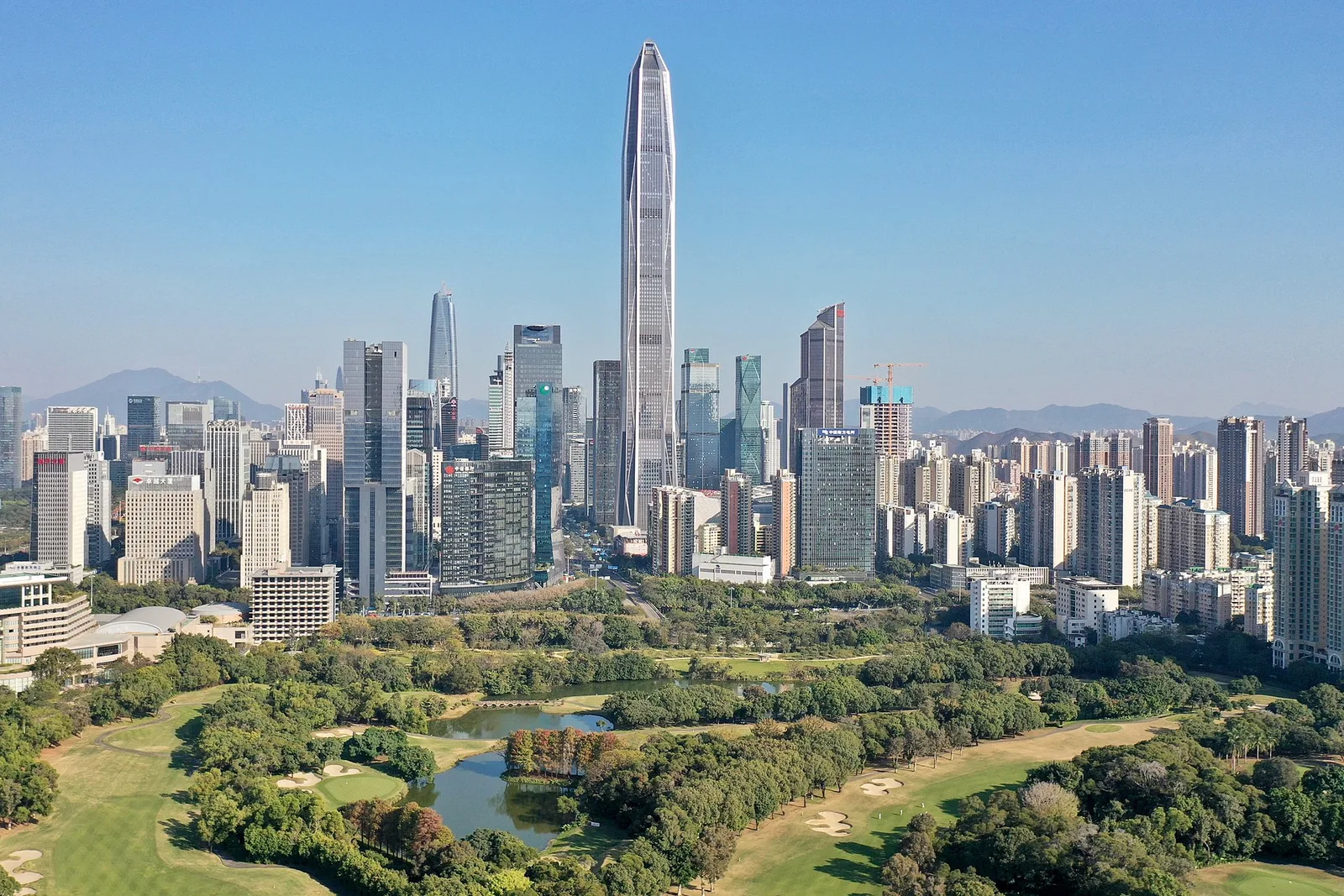
Image credit: Charlie fong
Based on GDP per capita (PPP). China: $25,067/capita.
Prices are 62% lower than the global benchmark (New York City = 100).
Income Category
GDP per Capita
City Population
Public-school quality + expat access, alongside international and private school cost — the two paths a relocating family weighs.
This describes China as a whole. Enrollment rules and school quality can vary within the country, so check with schools in Shenzhen, Guangdong.
Quality
Good public schools
Expat access
Legally possible, hard in practice
hardInstruction
Mandarin
Local-language fluency usually matters.
PISA / outcomes
Qualitative only
Using curated quality notes for now.
China's public system is academically strong, but the standard local-school path is not designed around short-horizon expat families.
Resident enrollment is sometimes possible, but hukou or local assignment practices and Mandarin-medium instruction make the public route hard in practice.
China's Compulsory Education Law requires all children to attend school. Homeschooling is illegal and the law is enforced. Some underground homeschooling communities exist but face legal risk.
Homeschool legality in China — check current regulations before committing.
Source: User-curated family relocation research (initial seed) (2026-04-14)
2 confirmed schools
1 more suggested by AI, not verified
Confirmed on its own website
Confirmed on its own website
Schools' websites are found with Wikidata and OpenStreetMap (© OpenStreetMap contributors), and each is checked on the school's own site.
Current nanny and household-help pricing snapshot for Shenzhen, Guangdong, China.
Full-time nanny (5 days)
$900-$1,250
monthly · confidence 0.65
Live-in / 24-7 nanny
$1,600-$2,200
monthly · confidence 0.65
Source: curated family relocation research
The concrete mobility picture for Shenzhen: airport access, urban transit, and rideshare practicality.
Walkability score: 81/100 (car light core). This is derived from the verified mobility profile and is used by the walkability gate.
Walkability
81/100
mobility profile car light core
Airport
International airport
Shenzhen Bao’an gives the city strong domestic and regional air access with useful long-haul coverage for its size.
Urban transit
Metro and bus
Shenzhen Metro makes many practical districts easy to navigate without a car, with buses covering local gaps beyond the strongest corridors.
Rideshare
Taxi and app-hailed rides
App-hailed rides are a normal fallback for airport trips and lower-frequency suburb-to-suburb travel.
Source: User-curated family relocation research (initial seed) (2026-04-14)
System strength, outcome signals, facility coverage, and self-pay visibility in China.
Method: country metrics come from public system indicators, facility coverage reflects mapped providers we can inventory, direct pricing only reflects observed self-pay pages, and relative care cost can fall back to broad cost-of-living healthcare indices. Sparse pricing does not imply sparse healthcare availability.
High national coverage, strong doctor availability, and solid hospital-bed capacity support this rating.
Broad public coverage, country-level outcomes are comparatively strong, and a visible public hospital footprint support this rating.
The private footprint is not very visible yet and self-pay pricing transparency is still sparse weigh on this rating.
UHC coverage
85/100
2023
Physicians
3.11/1k
2022
Hospital beds
5.63/1k
2023
Out of pocket
32%
2023
Life expectancy
78.0 yrs
2024
Maternal mortality
16/100k
2023
Neonatal mortality
2.6/1k
2024
There is visible specialty depth and country-level outcomes are comparatively strong help, but the private footprint is still thin and price transparency is still sparse.
Published self-pay prices are scarce weigh on this rating.
No verified self-pay prices are published for the tracked facilities in China yet.
This usually reflects low online price transparency rather than a lack of healthcare providers.
System metrics: World Bank WDI · Updated 2026-11-01
Source: Numbeo where a city row is matched; otherwise World Bank WGI and country-level safety context.
World Bank WGI scale: -2.5 to +2.5.
| Sector | Median |
|---|---|
| Agriculture & Farming | — |
| Arts, Entertainment & Recreation | — |
| Construction | — |
| Education | — |
| Finance & Insurance | — |
| Healthcare & Social Work | — |
| Hospitality & Food Service | — |
| Information & Technology | — |
| Manufacturing | — |
| Mining & Quarrying | — |
| Other Services | — |
| Professional & Scientific Services | — |
| Real Estate | — |
| Retail & Wholesale Trade | — |
| Transport & Logistics | — |
| Utilities | — |
2022 annual wages in Shenzhen, Guangdong, China · Source: NBS (province-adjusted)
Short-stay entry
US passport holders need advance travel authorization or a visa before entry.
Structured from the deltas already shown on this page — no invented facts, no extra data sources.
Your money goes about 1.7x further in Shenzhen than in the US, based on the current PPP estimate.
Shenzhen is cheaper overall than New York City — overall living costs are about 62% cheaper than the global benchmark (New York City) for Shenzhen.
Rent in Shenzhen is about 82% cheaper than the global benchmark (New York City).
Groceries in Shenzhen are about 59% cheaper than the global benchmark (New York City), and restaurant prices are about 76% cheaper than the same benchmark.
Shenzhen sits on China's southern coast directly across the border from Hong Kong and grew from a fishing settlement into a 17-million-person hardware manufacturing and tech hub in roughly four decades. The city headquarters Huawei, Tencent, BYD, and DJI, and offers relocators the youngest median age and highest per-capita income of any mainland Chinese megacity. Subtropical climate is warm year-round but humid and typhoon-prone from June through September. Metro coverage is extensive and still expanding, English use is higher than in interior China, and proximity to Hong Kong gives easy weekend access to international banking and air links, though cross-border visa logistics have grown more complex since 2020.
No password needed. Takes ~30 seconds.
Comparable to Shenzhen — worth a look if you're weighing alternatives.