
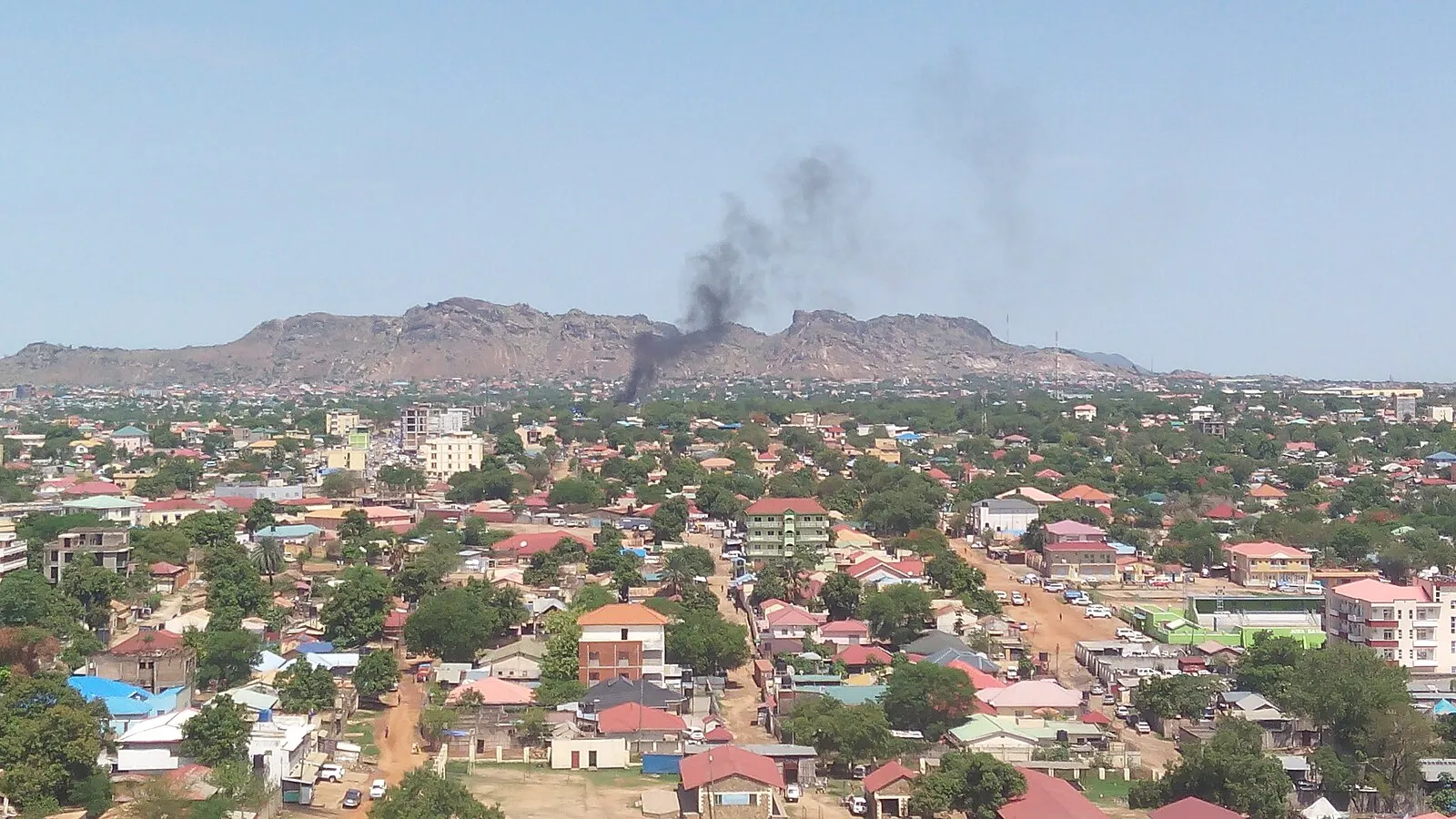
Cost of Living inJuba, South Sudan
Image credit: Rigan123
Purchasing Power vs. United States
Income Category
City Population
Child Education
International and private school tuition + curriculum mix for relocating families.
International & private schools
Childcare & Domestic Help
Nanny, housekeeper, and driver pricing is not yet sourced for Juba. We publish this section only when we can tie it to local job-board, agency, or country fallback evidence.
Getting Around
The concrete mobility picture for Juba: airport access, urban transit, and rideshare practicality.
Airport
Juba international airport access
The refreshed local city data-type matrix lists Juba as a missing South Sudan mobility/walkability row; add conservative first-city coverage through juba international airport access instead of leaving the country at zero direct family mobility coverage.
Urban transit
Road-led mobility with central errand access
Daily movement remains road-led, but buses, minibuses, taxis, and central errands provide a conservative non-car baseline until richer city-specific sources land.
Rideshare
Taxi-first mobility
Taxis or arranged rides are the dependable fallback for airport transfers and neighborhoods beyond fixed-route service.
Source: User-curated family relocation research (initial seed) (2026-04-14)
Healthcare
System strength, outcome signals, facility coverage, and self-pay visibility in South Sudan.
Method: country metrics come from public system indicators, facility coverage reflects mapped providers we can inventory, direct pricing only reflects observed self-pay pages, and relative care cost can fall back to broad cost-of-living healthcare indices. Sparse pricing does not imply sparse healthcare availability.
Healthcare system
LimitedCoverage looks thinner, doctor staffing is lighter, and hospital capacity looks tighter weigh on this rating.
Public care
LimitedA visible public hospital footprint help, but public coverage looks thinner and public funding looks lighter.
Private care
MixedA meaningful tracked hospital and clinic network and a clearly private facility base help, but self-pay pricing transparency is still sparse.
UHC coverage
41/100
2023
Physicians
0.04/1k
2022
Hospital beds
0.00/1k
2025
Out of pocket
27%
2023
Outcome signals
Life expectancy
57.7 yrs
2024
Maternal mortality
692/100k
2023
Neonatal mortality
39.5/1k
2024
International patient readiness
MixedA visible private hospital base and there is visible specialty depth help, but price transparency is still sparse and headline outcomes are less reassuring.
Pricing transparency
LimitedPublished self-pay prices are scarce weigh on this rating.
Facility coverage
Self-pay pricing visibility
No verified self-pay prices are published for the tracked facilities in South Sudan yet.
This usually reflects low online price transparency rather than a lack of healthcare providers.
Notable facilities
System metrics: World Bank WDI · Updated 2026-09-01
Safety & Governance
Street Safety
Source: Numbeo where a city row is matched; otherwise World Bank WGI and country-level safety context.
Political Stability
World Bank WGI scale: -2.5 to +2.5.
Wages by Sector
| Sector | Median |
|---|---|
| Administrative & Support Services | — |
| Agriculture & Farming | — |
| Arts, Entertainment & Recreation | — |
| Construction | — |
| Education | — |
| Finance & Insurance | — |
| Healthcare & Social Work | — |
| Hospitality & Food Service | — |
| Information & Technology | — |
| Manufacturing | — |
| Mining & Quarrying | — |
| Other Services | — |
| Professional & Scientific Services | — |
| Real Estate | — |
| Retail & Wholesale Trade | — |
| Transport & Logistics | — |
| Utilities | — |
2024 annual wages in Juba, South Sudan · Source: GDP-derived estimate (national)
Price Comparison vs. US
Visa Information (US passport)
Short-stay entry
US passport holders need advance travel authorization or a visa before entry.
Quick comparison FAQ
Structured from the deltas already shown on this page — no invented facts, no extra data sources.
How far does your money go in Juba compared with the US?
Your money goes about 5.3x further in Juba than in the US, based on the current PPP estimate.
About Juba
Juba is the capital of South Sudan, perched on the west bank of the White Nile in a low-lying tropical plain. With roughly 450,000 residents, it operates as the political and humanitarian hub of the world's youngest nation, and the economy is dominated by government, aid organizations, and informal trade rather than any private-sector base. Relocators should be candid about the conditions: power is largely generator-dependent, road links degrade quickly outside the urban core, healthcare evacuations are common for serious cases, and security planning is mandatory for most foreign residents. Costs are surprisingly high for the region because nearly all consumer goods are imported overland from Uganda and Kenya.
See the full breakdown — free
No password needed. Takes ~30 seconds.