
Lycee Francais de Port-au-Prince
FrenchInternational
Fee not published
Confirmed on its own website
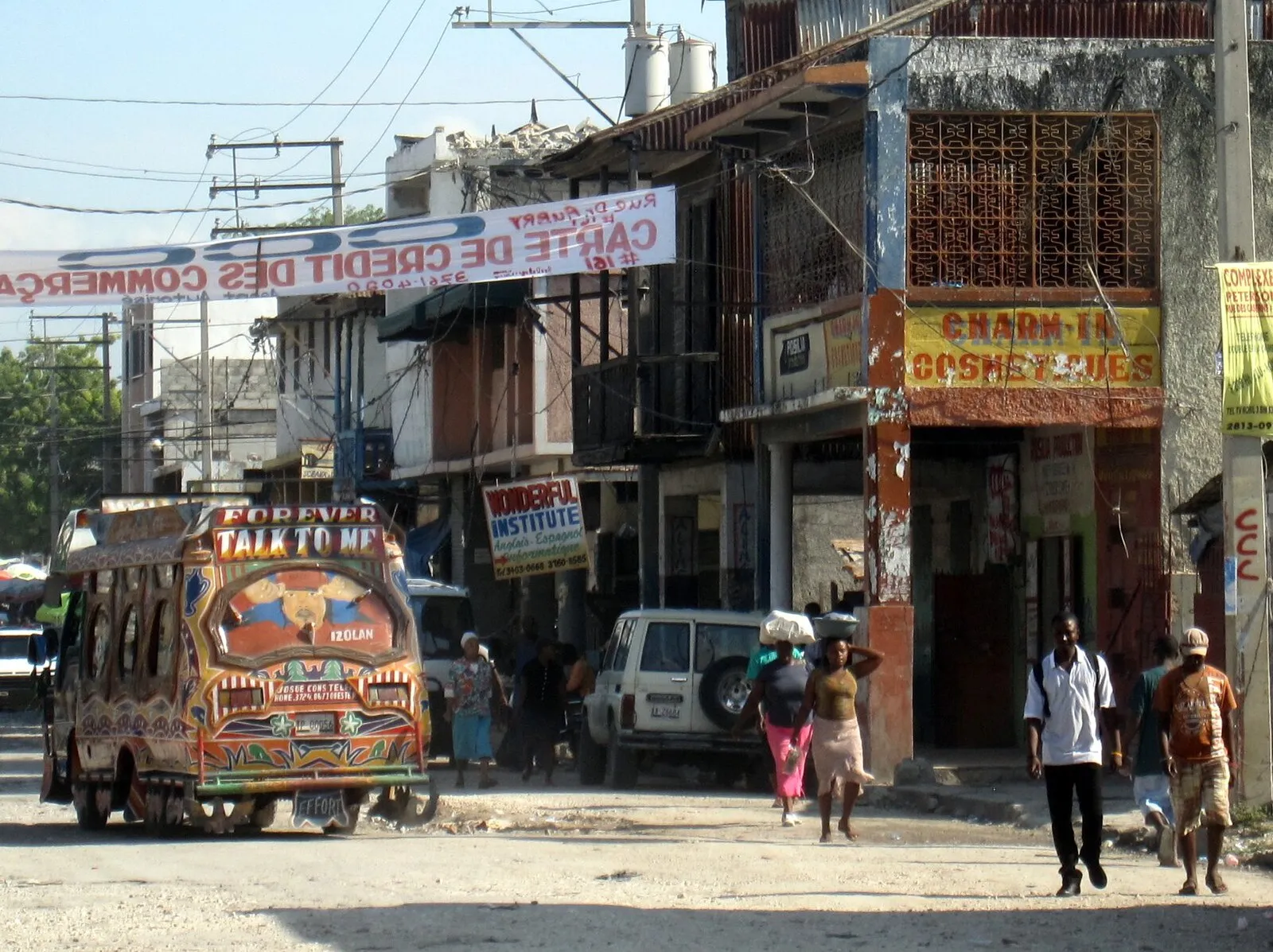
Image credit: Stefan Krasowski from New York, NY, USA
Based on GDP per capita (PPP). Haiti: $2,678/capita.
Income Category
GDP per Capita
City Population
International and private school tuition + curriculum mix for relocating families.
1 confirmed school
2 more suggested by AI, not verified
Confirmed on its own website
Schools' websites are found with Wikidata and OpenStreetMap (© OpenStreetMap contributors), and each is checked on the school's own site.
Nanny, housekeeper, and driver pricing is not yet sourced for Port-au-Prince. We publish this section only when we can tie it to local job-board, agency, or country fallback evidence.
The concrete mobility picture for Port-au-Prince: airport access, urban transit, and rideshare practicality.
Walkability score: 42/100 (walkable core). This is derived from the verified mobility profile and is used by the walkability gate.
Walkability
42/100
mobility profile walkability mention
Airport
Port-au-Prince international airport access
The refreshed local city data-type matrix lists Port-au-Prince and adjacent Ouest municipalities as current mobility/walkability gaps; model the metro through the capital airport rather than treating each district as standalone.
Urban transit
Tap-tap, minibus, and taxi-led mobility
The metro is road-led and uneven, but tap-taps, minibuses, taxis, and short walkable neighborhood errands provide a conservative family mobility baseline.
Rideshare
Taxi-first, limited app coverage
Families should expect taxis or arranged rides to cover airport transfers and trips where informal transit is not practical.
Source: User-curated family relocation research (initial seed) (2026-04-14)
System strength, outcome signals, facility coverage, and self-pay visibility in Haiti.
Method: country metrics come from public system indicators, facility coverage reflects mapped providers we can inventory, direct pricing only reflects observed self-pay pages, and relative care cost can fall back to broad cost-of-living healthcare indices. Sparse pricing does not imply sparse healthcare availability.
Solid hospital-bed capacity help, but coverage looks thinner and doctor staffing is lighter.
Public coverage looks thinner, public funding looks lighter, and patients still shoulder a meaningful share of costs weigh on this rating.
A clearly private facility base help, but self-pay pricing transparency is still sparse.
UHC coverage
44/100
2023
Physicians
0.29/1k
2022
Hospital beds
4.90/1k
2023
Out of pocket
52%
2023
Life expectancy
65.1 yrs
2024
Maternal mortality
328/100k
2023
Neonatal mortality
22.6/1k
2024
A visible private hospital base help, but price transparency is still sparse and headline outcomes are less reassuring.
Published self-pay prices are scarce and few facilities expose web pages we can verify weigh on this rating.
No verified self-pay prices are published for the tracked facilities in Haiti yet.
This usually reflects low online price transparency rather than a lack of healthcare providers.
System metrics: World Bank WDI · Updated 2026-11-01
Source: Numbeo where a city row is matched; otherwise World Bank WGI and country-level safety context.
World Bank WGI scale: -2.5 to +2.5.
| Sector | Median |
|---|---|
| Administrative & Support Services | — |
| Agriculture & Farming | — |
| Arts, Entertainment & Recreation | — |
| Construction | — |
| Education | — |
| Finance & Insurance | — |
| Healthcare & Social Work | — |
| Hospitality & Food Service | — |
| Information & Technology | — |
| Manufacturing | — |
| Mining & Quarrying | — |
| Other Services | — |
| Professional & Scientific Services | — |
| Public Administration & Defence | — |
| Real Estate | — |
| Retail & Wholesale Trade | — |
| Transport & Logistics | — |
| Utilities | — |
2024 annual wages in Port-au-Prince, Haiti · Source: GDP-derived estimate (national)
Short-stay entry
US passport holders can stay up to 90 days without a visa.
Structured from the deltas already shown on this page — no invented facts, no extra data sources.
Your money goes about 1.1x further in Port-au-Prince than in the US, based on the current PPP estimate.
Port-au-Prince is the capital of Haiti and home to about 1.23 million people in the city proper, with the broader metropolitan area pushing past two and a half million on a natural harbor of the Gulf of Gonave. It is the country's overwhelming political, port, and economic center, hosting most of its formal-sector employment, embassies, and humanitarian infrastructure. The climate is tropical with a wet season from April through October and serious hurricane exposure. Relocators should weigh that Haiti's compounding security collapse since 2021, with armed groups controlling significant urban territory and the airport repeatedly closed, has made the city largely accessible only through humanitarian or diplomatic channels. French and Haitian Creole are both essential.
No password needed. Takes ~30 seconds.