
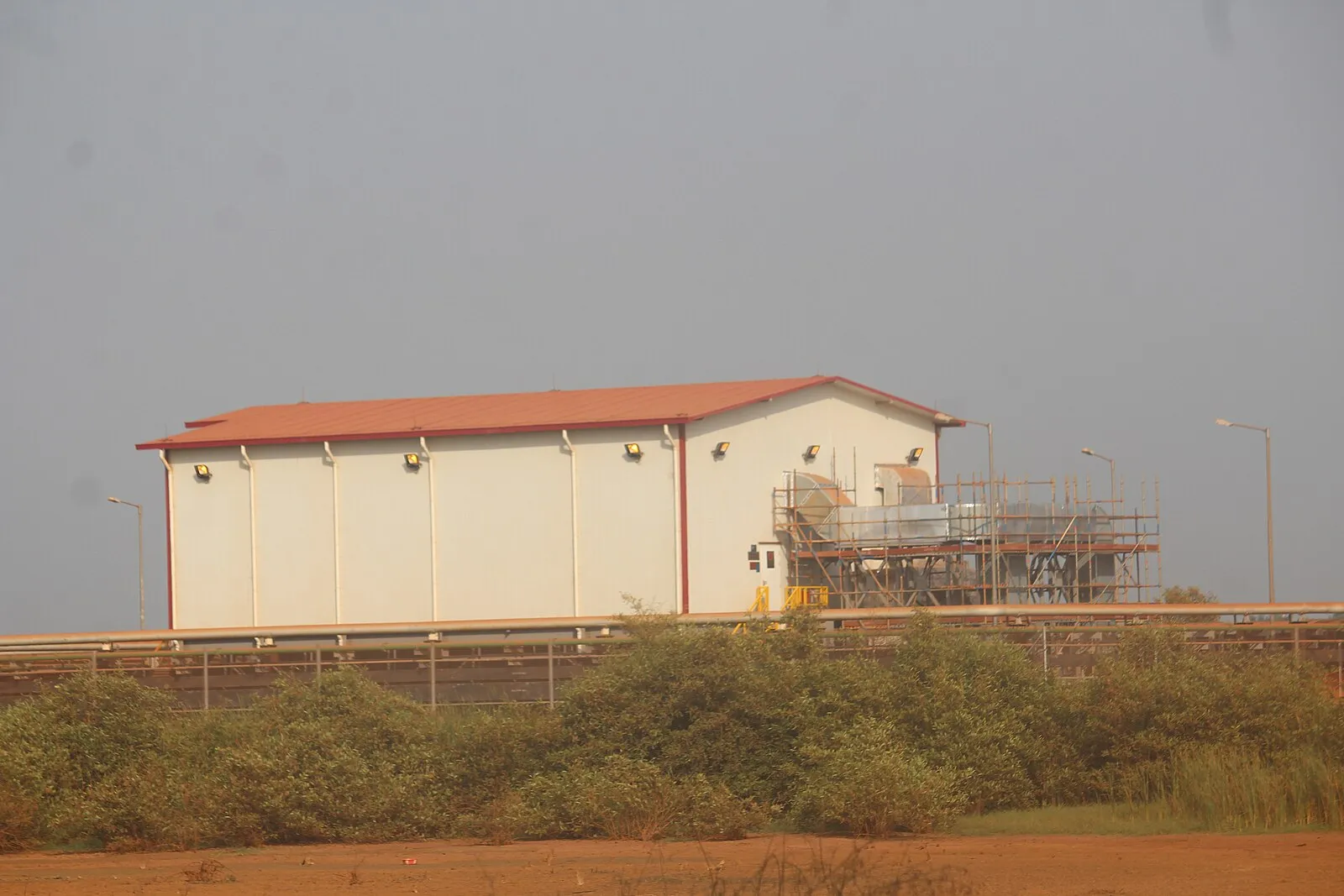
Cost of Living inKamsar, Guinea
Image credit: Aboubacarkhoraa
Purchasing Power vs. United States
Based on GDP per capita (PPP). Guinea: $4,016/capita.
Income Category
Happiness
5.0 / 10
#95 globally
GDP per Capita
City Population
Child Education
Public-schooling rules and international-school pricing are not sourced for Guinea yet. Quality, expat-access, instruction language, and tuition will appear here once verified.
Childcare & Domestic Help
Nanny, housekeeper, and driver pricing is not yet sourced for Kamsar. We publish this section only when we can tie it to local job-board, agency, or country fallback evidence.
Getting Around
Neighborhood mobility profiles are rolling out city by city.Kamsar is still missing a verified walkability, transit, airport, and rideshare profile.
Healthcare
System strength, outcome signals, facility coverage, and self-pay visibility in Guinea.
Method: country metrics come from public system indicators, facility coverage reflects mapped providers we can inventory, direct pricing only reflects observed self-pay pages, and relative care cost can fall back to broad cost-of-living healthcare indices. Sparse pricing does not imply sparse healthcare availability.
Healthcare system
LimitedCoverage looks thinner, doctor staffing is lighter, and hospital capacity looks tighter weigh on this rating.
Public care
LimitedPublic coverage looks thinner, public funding looks lighter, and patients still shoulder a meaningful share of costs weigh on this rating.
Private care
LimitedThe tracked private-style network still looks thin and self-pay pricing transparency is still sparse weigh on this rating.
UHC coverage
43/100
2023
Physicians
0.21/1k
2022
Hospital beds
0.30/1k
2011
Out of pocket
54%
2023
Outcome signals
Life expectancy
60.9 yrs
2024
Maternal mortality
494/100k
2023
Neonatal mortality
29.8/1k
2024
International patient readiness
LimitedPrice transparency is still sparse and headline outcomes are less reassuring weigh on this rating.
Pricing transparency
LimitedPublished self-pay prices are scarce and few facilities expose web pages we can verify weigh on this rating.
Facility coverage
Self-pay pricing visibility
No verified self-pay prices are published for the tracked facilities in Guinea yet.
This usually reflects low online price transparency rather than a lack of healthcare providers.
Notable facilities
System metrics: World Bank WDI · Updated 2026-09-01
Safety & Governance
Street Safety
Source: Numbeo where a city row is matched; otherwise World Bank WGI and country-level safety context.
Political Stability
World Bank WGI scale: -2.5 to +2.5.
Wages by Sector
| Sector | Median |
|---|---|
| Agriculture & Farming | — |
| Arts, Entertainment & Recreation | — |
| Construction | — |
| Education | — |
| Finance & Insurance | — |
| Healthcare & Social Work | — |
| Hospitality & Food Service | — |
| Manufacturing | — |
| Mining & Quarrying | — |
| Other Services | — |
| Public Administration & Defence | — |
| Real Estate | — |
| Retail & Wholesale Trade | — |
| Transport & Logistics | — |
| Utilities | — |
2019 annual wages in Kamsar, Guinea · Source: ILO ILOSTAT (national)
Price Comparison vs. US
Visa Information (US passport)
Short-stay entry
US passport holders need advance travel authorization or a visa before entry.
Quick comparison FAQ
Structured from the deltas already shown on this page — no invented facts, no extra data sources.
How far does your money go in Kamsar compared with the US?
Your money goes about 2.8x further in Kamsar than in the US, based on the current PPP estimate.
What quality-of-life signal do we have for Kamsar?
The quality-of-life signal for Kamsar is the World Happiness Report score for Guinea — 5.0 (ranking #95 globally) in the latest available national data, which gives a rough national-level read for Kamsar.
About Kamsar
Kamsar is a port town in Boke Region in northwestern Guinea, on the Atlantic coast about 200 kilometers northwest of Conakry. The roughly 113,000 residents live in a town whose economy is overwhelmingly tied to bauxite: Kamsar is the main export port for the Compagnie des Bauxites de Guinee (CBG) operation, one of the largest bauxite mines in the world, with a dedicated rail line from Sangaredi and a deep-water terminal. French is the official language and Susu and Fula are widely spoken. The climate is tropical with a long wet season from May to November and a dry season the rest of the year, with very high humidity year-round. For relocators, the practical considerations are the dominance of the mining sector in local employment, the limited public infrastructure outside the company town, the long road trip to Conakry on the often-difficult N3 highway, and the broader political and security context in Guinea.
See the full breakdown — free
No password needed. Takes ~30 seconds.