
Daegu International School
AmericanInternational
Confirmed on its own website
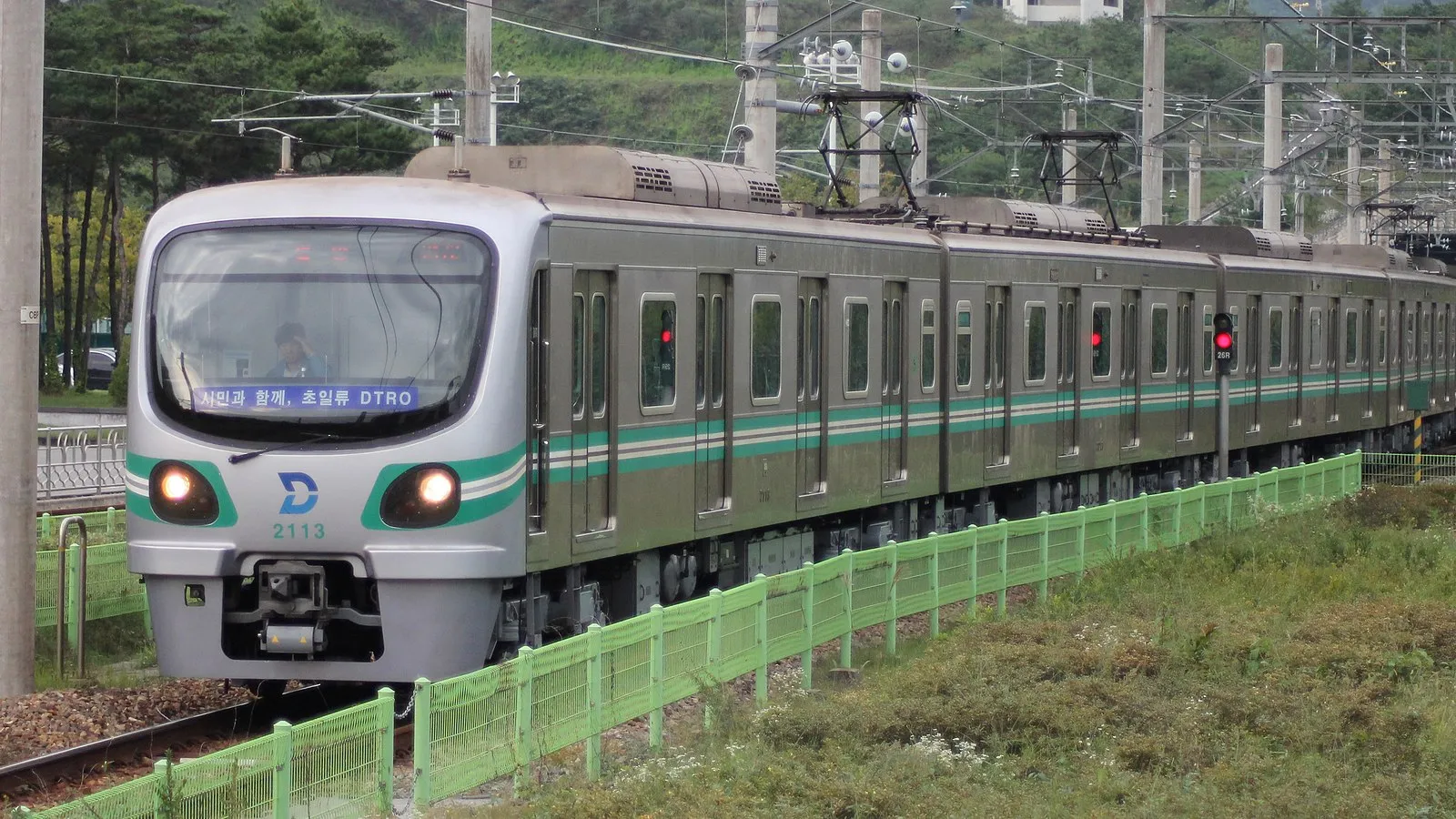
Image credit: Ken Eckert This photo was taken with Canon PowerShot G10
Based on GDP per capita (PPP). South Korea: $55,697/capita.
Prices are 43% lower than the global benchmark (New York City = 100).
Using the country-level NYC comparison for now. We do not have a defensible city-level aggregate cost index for this city yet.
Income Category
GDP per Capita
City Population
Public-school quality + expat access, alongside international and private school cost — the two paths a relocating family weighs.
This describes South Korea as a whole. Enrollment rules and school quality can vary within the country, so check with schools in Daegu.
Quality
Excellent public schools
Expat access
Legally possible, hard in practice
hardInstruction
Korean
Local-language fluency usually matters.
PISA / outcomes
Qualitative only
Using curated quality notes for now.
South Korea’s public system is academically elite, especially in math and science, with very strong national outcomes.
Resident families can sometimes access local schools, but the Korean-language classroom and exam culture make it a difficult fit for most expat families.
South Korea requires school attendance but allows alternatives including homeschooling with education office approval. In practice, approval is difficult and homeschooling is culturally unusual. Some families use registered alternative schools instead.
Homeschool legality in South Korea — check current regulations before committing.
Source: User-curated family relocation research (initial seed) (2026-04-14)
1 confirmed school
2 more suggested by AI, not verified
Confirmed on its own website
Schools' websites are found with Wikidata and OpenStreetMap (© OpenStreetMap contributors), and each is checked on the school's own site.
Estimate-only country fallback for the family-support costs we track in South Korea.
Full-time nanny (5 days)
$1,150-$2,250
Estimate-only country fallback
Live-in / 24-7 nanny
$2,200-$4,250
Estimate-only country fallback
Source: curated family relocation research(derived country fallback)
The concrete mobility picture for Daegu: airport access, urban transit, and rideshare practicality.
Walkability score: 78/100 (walkable core). This is derived from the verified mobility profile and is used by the walkability gate.
Walkability
78/100
mobility profile walkability mention
Airport
Regional airport and KTX corridor
The refreshed Korea family mobility queue promotes Daegu as the top remaining direct gap; the checked-in city matrix already shows direct product-price plus integrated coverage, so family air access should stay modeled through Daegu’s regional airport and rail corridor rather than as a hub-scale market.
Urban transit
Metro, commuter rail, bus, and walkable core
Daegu already carries broader direct city data and operates a real metro plus rail-and-bus backbone, so daily family movement should be modeled as transit-supported across the core instead of a bus-only fallback.
Rideshare
Taxi and app-hailed rides
Taxi coverage and app-booked rides are practical complements for station transfers, airport runs, and outer-district errands beyond the strongest rail corridors.
Source: User-curated family relocation research (initial seed) (2026-04-14)
System strength, outcome signals, facility coverage, and self-pay visibility in South Korea.
Method: country metrics come from public system indicators, facility coverage reflects mapped providers we can inventory, direct pricing only reflects observed self-pay pages, and relative care cost can fall back to broad cost-of-living healthcare indices. Sparse pricing does not imply sparse healthcare availability.
High national coverage, deep nursing capacity, and solid hospital-bed capacity support this rating.
Broad public coverage, country-level outcomes are comparatively strong, and a visible public hospital footprint support this rating.
A large tracked hospital and clinic network help, but the private footprint is not very visible yet and self-pay pricing transparency is still sparse.
UHC coverage
88/100
2023
Physicians
2.61/1k
2022
Hospital beds
12.8/1k
2022
Out of pocket
34%
2024
Life expectancy
83.6 yrs
2024
Maternal mortality
4/100k
2023
Neonatal mortality
1.2/1k
2024
Multiple facilities have websites and there is visible specialty depth help, but the private footprint is still thin and price transparency is still sparse.
Multiple facilities have crawlable websites help, but published self-pay prices are scarce.
No verified self-pay prices are published for the tracked facilities in South Korea yet.
This usually reflects low online price transparency rather than a lack of healthcare providers.
System metrics: World Bank WDI · Updated 2026-11-01
Source: Numbeo where a city row is matched; otherwise World Bank WGI and country-level safety context.
World Bank WGI scale: -2.5 to +2.5.
| Sector | Median |
|---|---|
| Administrative & Support Services | — |
| Agriculture & Farming | — |
| Arts, Entertainment & Recreation | — |
| Construction | — |
| Education | — |
| Finance & Insurance | — |
| Healthcare & Social Work | — |
| Hospitality & Food Service | — |
| Information & Technology | — |
| Manufacturing | — |
| Mining & Quarrying | — |
| Other Services | — |
| Professional & Scientific Services | — |
| Real Estate | — |
| Retail & Wholesale Trade | — |
| Transport & Logistics | — |
| Utilities | — |
2022 annual wages in Daegu, South Korea · Source: KOSTAT (region-adjusted)
Short-stay entry
US passport holders can stay up to 90 days without a visa.
digital nomad
Migrated from legacy digital_nomad_visas row 35
working holiday
Working Holiday Visa (H-1)Structured from the deltas already shown on this page — no invented facts, no extra data sources.
Your money goes about 1.7x further in Daegu than in the US, based on the current PPP estimate. We are using the country-level cost index for South Korea here because a defensible city-level aggregate index is not available yet.
Daegu is cheaper overall than New York City — overall living costs are about 43% cheaper than the global benchmark (New York City) for Daegu. We are using the country-level cost index for South Korea here because a defensible city-level aggregate index is not available yet.
Rent in Daegu is about 86% cheaper than the global benchmark (New York City). We are using the country-level cost index for South Korea here because a defensible city-level aggregate index is not available yet.
Groceries in Daegu are about 28% cheaper than the global benchmark (New York City), and restaurant prices are about 67% cheaper than the same benchmark. We are using the country-level cost index for South Korea here because a defensible city-level aggregate index is not available yet.
Daegu is South Korea's fourth-largest city, sitting in a basin in the southeastern interior between Seoul and Busan and connected to both by KTX high-speed rail in under two hours. The local economy has traditionally centered on textiles and machinery, with newer concentrations in medical devices, fashion, and a growing K-pop and media presence around the universities. Costs sit meaningfully below Seoul, particularly for housing, which has drawn back-office and engineering relocations from the capital. For relocators the main constraints are summers that consistently rank among the hottest in Korea, a smaller foreign community and international school footprint than Seoul or Busan, and a more conservative civic culture by Korean standards, balanced by genuinely strong public transit and healthcare.
No password needed. Takes ~30 seconds.
Comparable to Daegu — worth a look if you're weighing alternatives.