
American School of Guatemala
American
Fee not published
Confirmed on its own website
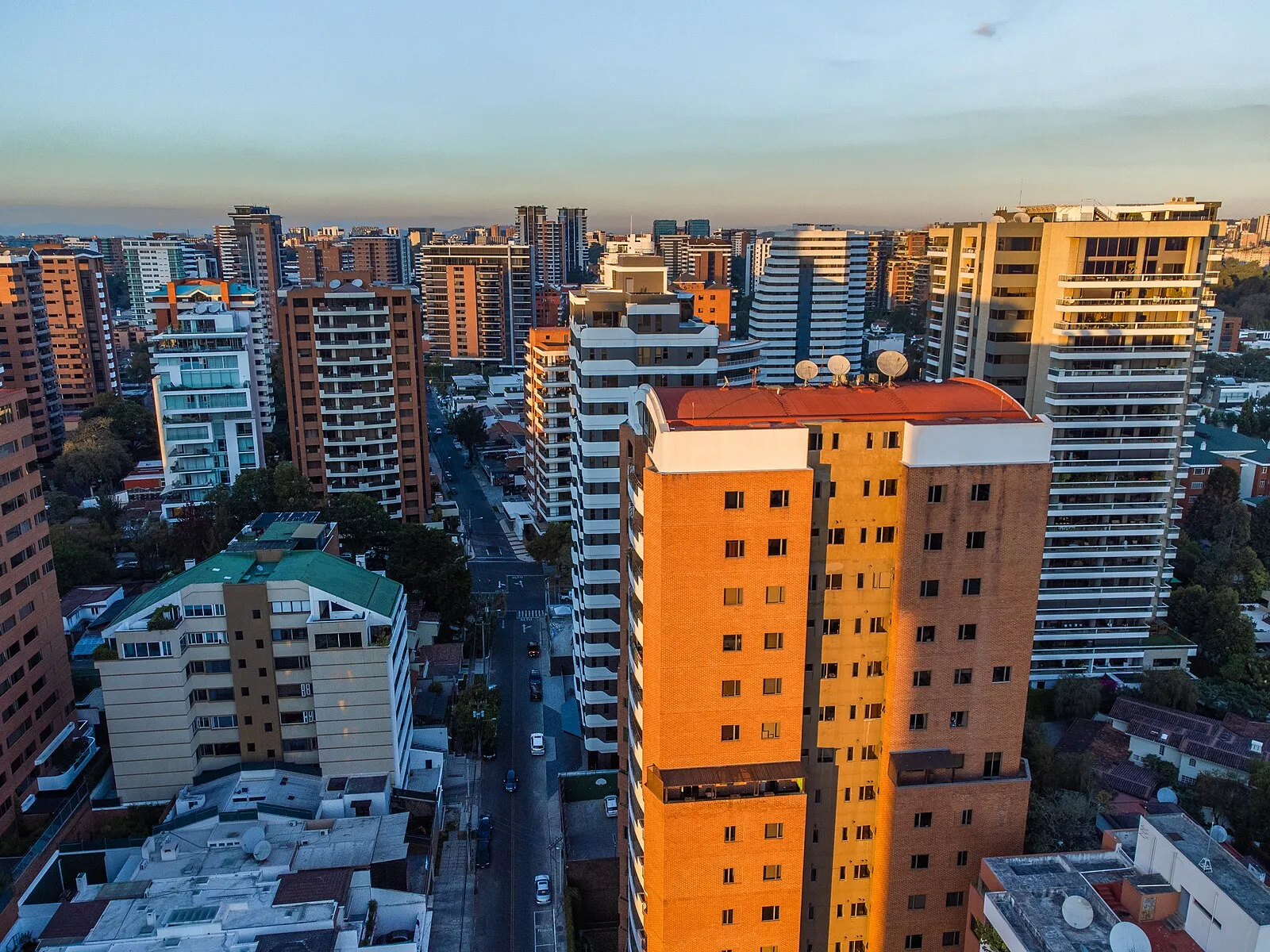
Image credit: Rene Hernandez
Based on GDP per capita (PPP). Guatemala: $12,987/capita.
Prices are 55% lower than the global benchmark (New York City = 100).
Using the country-level NYC comparison for now. We do not have a defensible city-level aggregate cost index for this city yet.
Income Category
GDP per Capita
City Population
Public-school quality + expat access, alongside international and private school cost — the two paths a relocating family weighs.
This describes Guatemala as a whole. Enrollment rules and school quality can vary within the country, so check with schools in Guatemala City.
Quality
Limited public-school fit
Expat access
Possible for residents
conditionalInstruction
Spanish
Local-language fluency usually matters.
PISA / outcomes
Qualitative only
Using curated quality notes for now.
Guatemala's public-school system is not the path most expat families choose when they have alternatives.
Resident families may be able to enroll, but Spanish-medium instruction and uneven quality make the public route a situational choice at best.
Guatemala requires compulsory primary education but does not have specific homeschooling legislation. Many expat families in Antigua and Lake Atitlán homeschool without interference. No formal registration or approval process.
Homeschool legality in Guatemala — check current regulations before committing.
Source: User-curated family relocation research (initial seed) (2026-04-14)
1 confirmed school
2 more suggested by AI, not verified
Confirmed on its own website
Schools' websites are found with Wikidata and OpenStreetMap (© OpenStreetMap contributors), and each is checked on the school's own site.
Estimate-only country fallback for the family-support costs we track in Guatemala.
Full-time nanny (5 days)
$375-$525
Estimate-only country fallback
Live-in / 24-7 nanny
$650-$900
Estimate-only country fallback
Source: curated family relocation research(derived country fallback)
The concrete mobility picture for Guatemala City: airport access, urban transit, and rideshare practicality.
Walkability score: 65/100 (walkable core). This is derived from the verified mobility profile and is used by the walkability gate.
Walkability
65/100
mobility profile walkability mention
Airport
La Aurora international airport
The current local walkability matrix surfaces Guatemala City metro municipalities as top gaps; La Aurora is the practical capital-area international gateway for family travel.
Urban transit
Transmetro, TuBus, buses, taxis, and walkable central zones
Guatemala City remains traffic-heavy, but Transmetro and TuBus corridors, conventional buses, and walkable central districts give families a structured car-light baseline for selected routines.
Rideshare
Uber and taxis available
App-hailed rides and taxis are practical fallbacks for airport runs, school trips, and cross-zone errands beyond fixed-route service.
Source: User-curated family relocation research (initial seed) (2026-04-14)
System strength, outcome signals, facility coverage, and self-pay visibility in Guatemala.
Method: country metrics come from public system indicators, facility coverage reflects mapped providers we can inventory, direct pricing only reflects observed self-pay pages, and relative care cost can fall back to broad cost-of-living healthcare indices. Sparse pricing does not imply sparse healthcare availability.
Coverage looks thinner, hospital capacity looks tighter, and households still pay a large share themselves weigh on this rating.
A visible public hospital footprint help, but public coverage looks thinner and public funding looks lighter.
Self-pay pricing transparency is still sparse weigh on this rating.
UHC coverage
58/100
2023
Physicians
1.28/1k
2020
Hospital beds
0.45/1k
2023
Out of pocket
57%
2023
Life expectancy
72.7 yrs
2024
Maternal mortality
94/100k
2023
Neonatal mortality
9.5/1k
2024
There is visible specialty depth help, but price transparency is still sparse.
Published self-pay prices are scarce and few facilities expose web pages we can verify weigh on this rating.
No verified self-pay prices are published for the tracked facilities in Guatemala yet.
This usually reflects low online price transparency rather than a lack of healthcare providers.
System metrics: World Bank WDI · Updated 2026-11-01
Source: Numbeo where a city row is matched; otherwise World Bank WGI and country-level safety context.
World Bank WGI scale: -2.5 to +2.5.
| Sector | Median |
|---|---|
| Administrative & Support Services | — |
| Agriculture & Farming | — |
| Arts, Entertainment & Recreation | — |
| Construction | — |
| Education | — |
| Finance & Insurance | — |
| Healthcare & Social Work | — |
| Hospitality & Food Service | — |
| Information & Technology | — |
| Manufacturing | — |
| Mining & Quarrying | — |
| Other Services | — |
| Professional & Scientific Services | — |
| Public Administration & Defence | — |
| Real Estate | — |
| Retail & Wholesale Trade | — |
| Transport & Logistics | — |
| Utilities | — |
2024 annual wages in Guatemala City, Guatemala · Source: ILO ILOSTAT (national)
Short-stay entry
US passport holders can stay up to 90 days without a visa.
Structured from the deltas already shown on this page — no invented facts, no extra data sources.
Your money goes about 2.4x further in Guatemala City than in the US, based on the current PPP estimate. We are using the country-level cost index for Guatemala here because a defensible city-level aggregate index is not available yet.
Guatemala City is cheaper overall than New York City — overall living costs are about 55% cheaper than the global benchmark (New York City) for Guatemala City. We are using the country-level cost index for Guatemala here because a defensible city-level aggregate index is not available yet.
Rent in Guatemala City is about 81% cheaper than the global benchmark (New York City). We are using the country-level cost index for Guatemala here because a defensible city-level aggregate index is not available yet.
Groceries in Guatemala City are about 46% cheaper than the global benchmark (New York City), and restaurant prices are about 59% cheaper than the same benchmark. We are using the country-level cost index for Guatemala here because a defensible city-level aggregate index is not available yet.
Guatemala City is the capital of Guatemala and the largest urban area in Central America, set in a high-elevation basin at around 1,500 meters that gives it a mild year-round climate often called the eternal spring. The economy combines manufacturing, services, finance, and a substantial role as the regional headquarters for many Central American operations. Relocators should weigh Guatemala City carefully by zone: numbered zonas vary sharply in safety and amenities, with Zonas 10, 14, and 15 hosting most foreign professionals. Spanish is essential. The metro is served by busy international flights to U.S. and Latin American hubs. Volcanic activity from nearby Pacaya and Fuego is a periodic logistical factor.
No password needed. Takes ~30 seconds.
Comparable to Guatemala City — worth a look if you're weighing alternatives.