
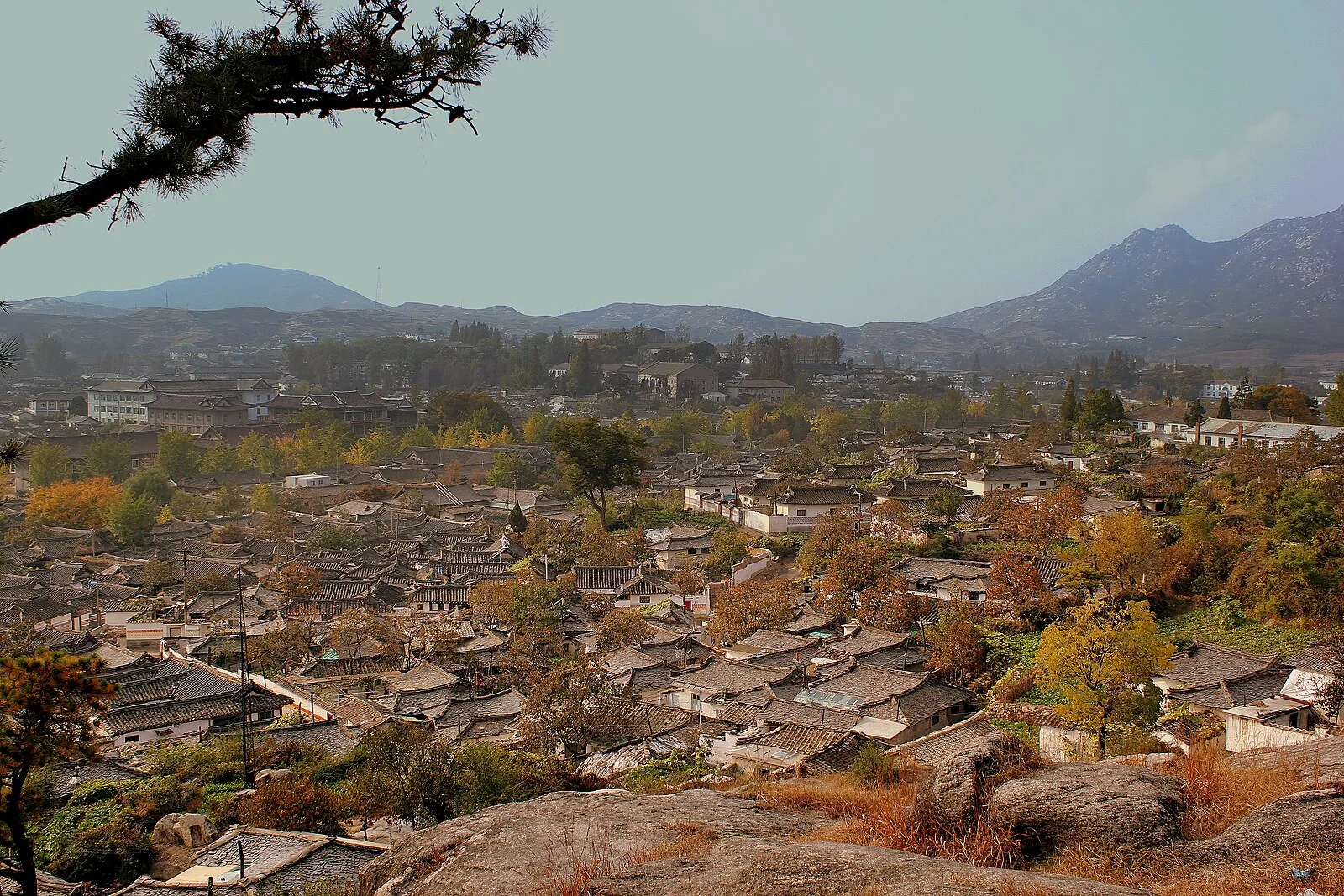
Cost of Living inKaesŏng, North Korea
Image credit: calflier001
Purchasing Power
We do not show a purchasing-power multiplier here yet because we do not have defensible PPP data for this country.
Income Category
City Population
Child Education
Public-schooling rules and international-school pricing are not sourced for North Korea yet. Quality, expat-access, instruction language, and tuition will appear here once verified.
Childcare & Domestic Help
Nanny, housekeeper, and driver pricing is not yet sourced for Kaesŏng. We publish this section only when we can tie it to local job-board, agency, or country fallback evidence.
Getting Around
Neighborhood mobility profiles are rolling out city by city.Kaesŏng is still missing a verified walkability, transit, airport, and rideshare profile.
Healthcare
System strength, outcome signals, facility coverage, and self-pay visibility in North Korea.
Method: country metrics come from public system indicators, facility coverage reflects mapped providers we can inventory, direct pricing only reflects observed self-pay pages, and relative care cost can fall back to broad cost-of-living healthcare indices. Sparse pricing does not imply sparse healthcare availability.
Hospital and clinic listings for Kaesŏng are still being verified. The country-level health-system summary for North Korea applies; named facilities and direct self-pay prices appear here only after they are source-backed.
Healthcare system
StrongGood national coverage, strong doctor availability, and solid hospital-bed capacity support this rating.
Public care
MixedRelatively low patient cost-sharing help, but public funding looks lighter.
Private care
LimitedThis is an inferred read based on facility depth, private ownership signals, and available self-pay pricing.
UHC coverage
77/100
2023
Physicians
3.63/1k
2017
Hospital beds
12.8/1k
2018
Out of pocket
0%
2025
Outcome signals
Life expectancy
73.7 yrs
2024
Maternal mortality
67/100k
2023
Neonatal mortality
8.9/1k
2024
International patient readiness
LimitedPrice transparency is still sparse weigh on this rating.
Pricing transparency
LimitedPublished self-pay prices are scarce weigh on this rating.
Facility coverage
Self-pay pricing visibility
No verified self-pay prices are published for the tracked facilities in North Korea yet.
This usually reflects low online price transparency rather than a lack of healthcare providers.
System metrics: World Bank WDI · Updated 2026-09-01
Safety & Governance
Street Safety
Source: Numbeo where a city row is matched; otherwise World Bank WGI and country-level safety context.
Political Stability
World Bank WGI scale: -2.5 to +2.5.
Wages by Sector
| Sector | Median |
|---|---|
| Administrative & Support Services | — |
| Agriculture & Farming | — |
| Arts, Entertainment & Recreation | — |
| Construction | — |
| Education | — |
| Finance & Insurance | — |
| Healthcare & Social Work | — |
| Hospitality & Food Service | — |
| Information & Technology | — |
| Manufacturing | — |
| Mining & Quarrying | — |
| Other Services | — |
| Professional & Scientific Services | — |
| Real Estate | — |
| Retail & Wholesale Trade | — |
| Transport & Logistics | — |
| Utilities | — |
2024 annual wages in Kaesŏng, North Korea · Source: GDP-derived estimate (national)
Price Comparison vs. US
Visa Information (US passport)
Short-stay entry
US passport holders need advance travel authorization or a visa before entry.
About Kaesŏng
Kaesŏng is a city in southern North Korea, sitting just north of the Demilitarized Zone with about 338,000 residents, historically the capital of the Goryeo dynasty. Its modern economic profile was shaped by the Kaesŏng Industrial Region, a joint inter-Korean manufacturing zone operated with South Korean firms until its closure in 2016; since then the local economy has reverted to a combination of light industry, agriculture in the surrounding plain, and tightly controlled trade. Korean is the working language. The climate is humid continental with cold winters. The city is not open to ordinary foreign relocation under DPRK policy, and discussion here is reference rather than a practical destination assessment.
See the full breakdown — free
No password needed. Takes ~30 seconds.