
QSI Sarajevo
American
Fee not published
Confirmed on its own website
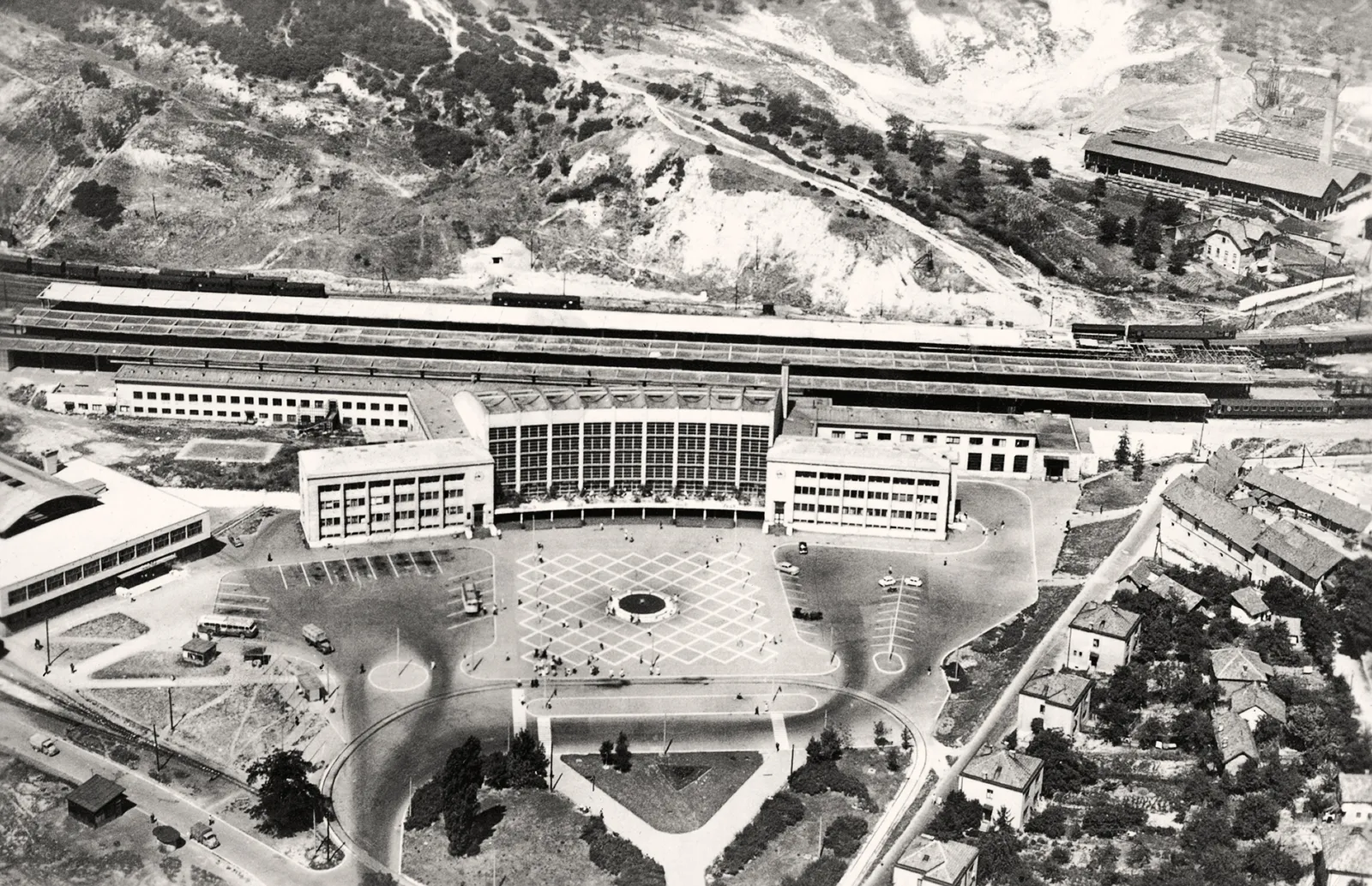
Image credit: Bjoertvedt
Based on GDP per capita (PPP). Bosnia and Herzegovina: $21,178/capita.
Prices are 59% lower than the global benchmark (New York City = 100).
Income Category
GDP per Capita
City Population
Public-school quality + expat access, alongside international and private school cost — the two paths a relocating family weighs.
This describes Bosnia and Herzegovina as a whole. Enrollment rules and school quality can vary within the country, so check with schools in Sarajevo.
Quality
Mixed quality
Assessment snapshot: 2022
Expat access
Resident families can use it
conditionalInstruction
Bosnian / Croatian / Serbian
Local-language fluency usually matters.
PISA / outcomes
398
Well below OECD avg
PISA 2022 · OECD avg ~480
Bosnia and Herzegovina has a fragmented school system across two entities with below-average PISA outcomes. The administrative structure is unusually complex for its size.
Resident families can technically enroll in local public schools, but the fragmented system, Bosnian-medium instruction, and quality variation push most expat families toward private options.
Bosnia and Herzegovina's education system is highly decentralized (Entities + Brčko District have separate systems). There is no uniform homeschooling framework. School attendance is generally required. Not a well-established path for expat homeschoolers.
Homeschool legality in Bosnia and Herzegovina — check current regulations before committing.
Source: User-curated family relocation research (initial seed) (2026-04-14)
1 confirmed school
2 more suggested by AI, not verified
Confirmed on its own website
Schools' websites are found with Wikidata and OpenStreetMap (© OpenStreetMap contributors), and each is checked on the school's own site.
Current nanny and household-help pricing snapshot for Sarajevo, Bosnia and Herzegovina.
Full-time nanny (5 days)
$600-$800
monthly · confidence 0.65
Live-in / 24-7 nanny
$1,100-$1,500
monthly · confidence 0.65
Source: curated family relocation research
The concrete mobility picture for Sarajevo: airport access, urban transit, and rideshare practicality.
Walkability score: 59/100 (transit supported). This is derived from the verified mobility profile and is used by the walkability gate.
Walkability
59/100
mobility profile transit backbone
Airport
International airport
Sarajevo gives Bosnia and Herzegovina practical European and regional air coverage through its main international airport.
Urban transit
Tram and bus
Sarajevo’s tram and bus network makes central districts workable without a car, even if the system is less seamless than Prague or Vienna.
Rideshare
Taxi-first, limited app coverage
Taxis remain the main everyday fallback, with app-booking options less central than in Bolt-heavy cities.
Source: User-curated family relocation research (initial seed) (2026-04-14)
System strength, outcome signals, facility coverage, and self-pay visibility in Bosnia and Herzegovina.
Method: country metrics come from public system indicators, facility coverage reflects mapped providers we can inventory, direct pricing only reflects observed self-pay pages, and relative care cost can fall back to broad cost-of-living healthcare indices. Sparse pricing does not imply sparse healthcare availability.
Maternal mortality is low help, but coverage looks thinner.
Country-level outcomes are comparatively strong and a visible public hospital footprint help, but public coverage looks thinner.
The private footprint is not very visible yet and self-pay pricing transparency is still sparse weigh on this rating.
UHC coverage
64/100
2023
Physicians
2.58/1k
2019
Hospital beds
2.35/1k
2019
Out of pocket
31%
2023
Life expectancy
78.0 yrs
2024
Maternal mortality
6/100k
2023
Neonatal mortality
4.4/1k
2024
Multiple facilities have websites and country-level outcomes are comparatively strong help, but the private footprint is still thin and price transparency is still sparse.
Multiple facilities have crawlable websites help, but published self-pay prices are scarce.
No verified self-pay prices are published for the tracked facilities in Bosnia and Herzegovina yet.
This usually reflects low online price transparency rather than a lack of healthcare providers.
System metrics: World Bank WDI · Updated 2026-11-01
Source: Numbeo where a city row is matched; otherwise World Bank WGI and country-level safety context.
World Bank WGI scale: -2.5 to +2.5.
| Sector | Median |
|---|---|
| Administrative & Support Services | — |
| Agriculture & Farming | — |
| Arts, Entertainment & Recreation | — |
| Construction | — |
| Education | — |
| Finance & Insurance | — |
| Healthcare & Social Work | — |
| Hospitality & Food Service | — |
| Information & Technology | — |
| Manufacturing | — |
| Mining & Quarrying | — |
| Other Services | — |
| Professional & Scientific Services | — |
| Public Administration & Defence | — |
| Retail & Wholesale Trade | — |
| Transport & Logistics | — |
| Utilities | — |
2024 annual wages in Sarajevo, Bosnia and Herzegovina · Source: ILO ILOSTAT (national)
Short-stay entry
US passport holders can stay up to 90 days without a visa.
Structured from the deltas already shown on this page — no invented facts, no extra data sources.
Your money goes about 2.5x further in Sarajevo than in the US, based on the current PPP estimate.
Sarajevo is cheaper overall than New York City — overall living costs are about 59% cheaper than the global benchmark (New York City) for Sarajevo.
Rent in Sarajevo is about 89% cheaper than the global benchmark (New York City).
Groceries in Sarajevo are about 60% cheaper than the global benchmark (New York City), and restaurant prices are about 62% cheaper than the same benchmark.
Sarajevo is the capital of Bosnia and Herzegovina, set in a narrow river valley in the Dinaric Alps where Ottoman, Austro-Hungarian, and Yugoslav-era architecture sit within a few blocks of each other. The city remains shaped by the 1992-1996 siege, which still affects infrastructure investment, and winter inversions trap coal smoke in the valley to produce some of Europe's worst seasonal air quality. Relocators get extremely low costs by European standards, a growing remote-work scene around Bascarsija, and easy mountain access including Olympic ski resorts twenty minutes out, but they should weigh the slow bureaucracy, complicated tripartite political system, and the fact that EU candidacy has not yet translated into Schengen access.
No password needed. Takes ~30 seconds.
Comparable to Sarajevo — worth a look if you're weighing alternatives.