
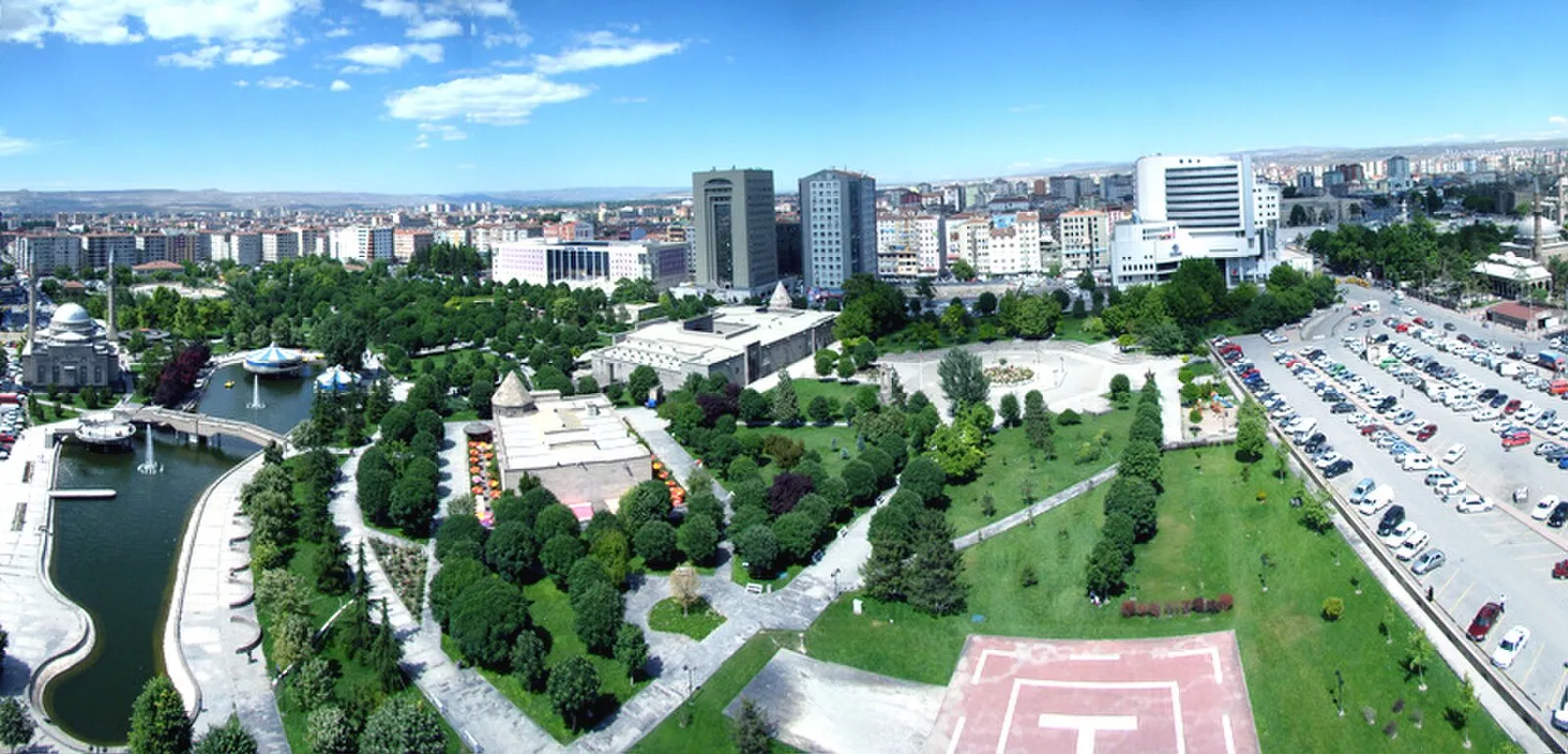
Cost of Living inKayseri, Turkey
Image credit: Kamil Saim
Purchasing Power vs. United States
Based on GDP per capita (PPP). Turkey: $36,154/capita.
How Far Your Money Goes
Prices are 60% lower than the global benchmark (New York City = 100).
Using the country-level NYC comparison for now. We do not have a defensible city-level aggregate cost index for this city yet.
Income Category
Happiness
5.0 / 10
#96 globally
GDP per Capita
City Population
Child Education
Public-school quality, expat access, instruction language, and homeschool legality for relocating families.
Public schools
Public-schooling rules are set nationally for Turkey; Kayseri-specific enrollment notes are still being verified.
Quality
Mixed public-school option
Expat access
Possible, not easy for expats
hardInstruction
Turkish
Language fit is more manageable.
PISA / outcomes
Qualitative only
Using curated quality notes for now.
Why this quality rating
Turkey's public schools can work for local families, but expat fit is weaker and the public path is not usually the obvious choice when alternatives exist.
Why the expat-access rating looks like this
Resident enrollment is possible, but Turkish-medium instruction and uneven school quality make the public route hard for most foreign families.
🚫 Homeschooling
Homeschooling not legalTurkey requires compulsory school attendance. Homeschooling is not permitted under current law. Foreign residents are technically subject to the same rules, though enforcement varies for non-citizens.
Homeschool legality in Turkey — check current regulations before committing.
Source: User-curated family relocation research (initial seed) (2026-04-14)
Childcare & Domestic Help
Estimate-only country fallback for the family-support costs we track in Turkey.
Full-time nanny (5 days)
$525-$1,000
Estimate-only country fallback
Live-in / 24-7 nanny
$950-$1,750
Estimate-only country fallback
Source: curated family relocation research(derived country fallback)
Getting Around
Neighborhood mobility profiles are rolling out city by city.Kayseri is still missing a verified walkability, transit, airport, and rideshare profile.
Healthcare
System strength, outcome signals, facility coverage, and self-pay visibility in Turkey.
Method: country metrics come from public system indicators, facility coverage reflects mapped providers we can inventory, direct pricing only reflects observed self-pay pages, and relative care cost can fall back to broad cost-of-living healthcare indices. Sparse pricing does not imply sparse healthcare availability.
Healthcare system
StrongGood national coverage, solid hospital-bed capacity, and maternal mortality is low support this rating.
Public care
GoodStrong public funding, relatively low patient cost-sharing, and a visible public hospital footprint support this rating.
Private care
LimitedThe private footprint is not very visible yet and self-pay pricing transparency is still sparse weigh on this rating.
UHC coverage
77/100
2023
Physicians
2.24/1k
2022
Hospital beds
3.05/1k
2023
Out of pocket
19%
2023
Outcome signals
Life expectancy
77.4 yrs
2024
Maternal mortality
15/100k
2023
Neonatal mortality
4.6/1k
2024
International patient readiness
LimitedMultiple facilities have websites help, but the private footprint is still thin and price transparency is still sparse.
Pricing transparency
LimitedMultiple facilities have crawlable websites help, but published self-pay prices are scarce.
Facility coverage
Self-pay pricing visibility
No verified self-pay prices are published for the tracked facilities in Turkey yet.
This usually reflects low online price transparency rather than a lack of healthcare providers.
Notable facilities
System metrics: World Bank WDI · Updated 2026-09-01
Safety & Governance
Street Safety
Source: Numbeo where a city row is matched; otherwise World Bank WGI and country-level safety context.
Political Stability
World Bank WGI scale: -2.5 to +2.5.
Wages by Sector
| Sector | Median |
|---|---|
| Administrative & Support Services | — |
| Agriculture & Farming | — |
| Arts, Entertainment & Recreation | — |
| Construction | — |
| Education | — |
| Finance & Insurance | — |
| Healthcare & Social Work | — |
| Hospitality & Food Service | — |
| Information & Technology | — |
| Manufacturing | — |
| Mining & Quarrying | — |
| Other Services | — |
| Professional & Scientific Services | — |
| Public Administration & Defence | — |
| Real Estate | — |
| Retail & Wholesale Trade | — |
| Transport & Logistics | — |
| Utilities | — |
2024 annual wages in Kayseri, Turkey · Source: TurkStat (region-adjusted)
Price Comparison vs. US
Visa Information (US passport)
Short-stay entry
US passport holders can enter without a visa.
Long-Term Visa Programs
investment
Turkey Citizenship by InvestmentQuick comparison FAQ
Structured from the deltas already shown on this page — no invented facts, no extra data sources.
How far does your money go in Kayseri compared with the US?
Your money goes about 3.4x further in Kayseri than in the US, based on the current PPP estimate. We are using the country-level cost index for Turkey here because a defensible city-level aggregate index is not available yet.
Is Kayseri cheaper or more expensive overall than New York City?
Kayseri is cheaper overall than New York City — overall living costs are about 60% cheaper than the global benchmark (New York City) for Kayseri. We are using the country-level cost index for Turkey here because a defensible city-level aggregate index is not available yet.
How does rent in Kayseri compare with New York City?
Rent in Kayseri is about 88% cheaper than the global benchmark (New York City). We are using the country-level cost index for Turkey here because a defensible city-level aggregate index is not available yet.
How expensive are groceries and restaurants in Kayseri?
Groceries in Kayseri are about 60% cheaper than the global benchmark (New York City), and restaurant prices are about 61% cheaper than the same benchmark. We are using the country-level cost index for Turkey here because a defensible city-level aggregate index is not available yet.
About Kayseri
Kayseri is a central Anatolian city in Turkey, an inland industrial hub of about 1.45 million sitting at roughly 1,050 meters at the foot of the extinct Mount Erciyes volcano. The economy is heavily oriented around furniture manufacturing (Kayseri is the largest furniture-production cluster in Turkey), textiles, food processing, and the Kayseri Free Trade Zone, alongside a notably conservative business culture. Relocators should weigh a cold semi-arid continental climate with cold, snowy winters and hot, dry summers, Turkish-dominant daily life with limited English outside business circles, and a small foreign community largely tied to industry-buyer offices and the universities. The airport handles domestic flights plus seasonal European charters; Istanbul is roughly an hour away by air.
See the full breakdown — free
No password needed. Takes ~30 seconds.
More cities in Turkey
Cities with a similar cost of living
Comparable to Kayseri — worth a look if you're weighing alternatives.