
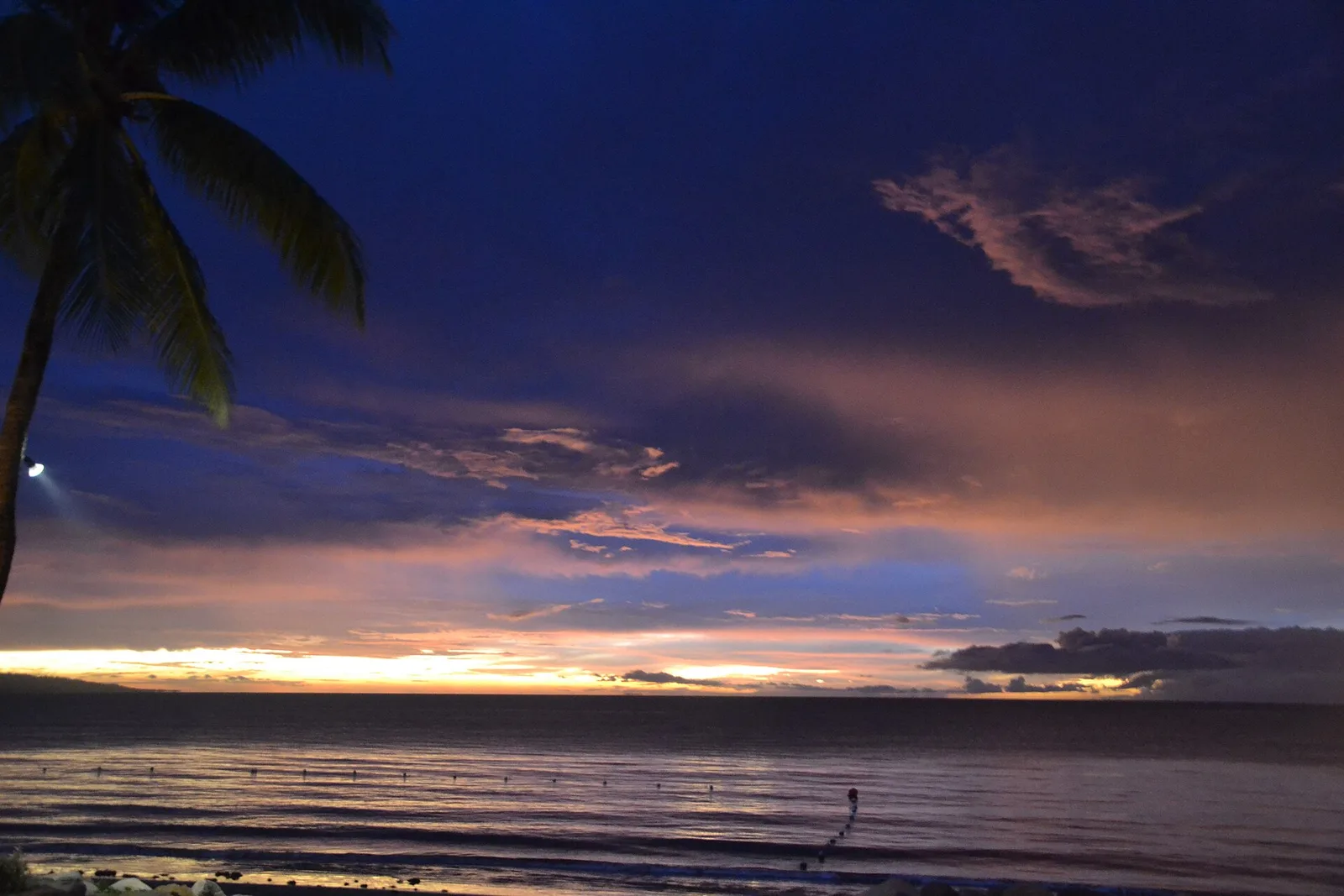
Cost of Living in Fiji
Image credit: Simon_sees from Australia
Purchasing Power vs. United States
Based on GDP per capita (PPP). Fiji: $13,592/capita.
Cities in Fiji
Income Category
GDP per Capita
Population
How Far Your Money Goes
Prices are 64% lower than the global benchmark (New York City = 100).
Child Education
Public-schooling rules are not sourced for Fiji yet. Country-level enrollment, instruction-language, and homeschool notes will appear here once verified.
Childcare & Domestic Help
Nanny, housekeeper, and driver pricing is not yet sourced for Fiji. We publish this section only when we can tie it to verified local samples or a clearly marked country fallback.
Healthcare
System strength, outcome signals, facility coverage, and self-pay visibility in Fiji.
Method: country metrics come from public system indicators, facility coverage reflects mapped providers we can inventory, direct pricing only reflects observed self-pay pages, and relative care cost can fall back to broad cost-of-living healthcare indices. Sparse pricing does not imply sparse healthcare availability.
Healthcare system
LimitedLow out-of-pocket burden help, but headline outcomes are weaker and newborn outcomes are weaker.
Public care
MixedStrong public funding and relatively low patient cost-sharing help, but country-level outcomes are weaker.
Private care
MixedA clearly private facility base help, but self-pay pricing transparency is still sparse.
UHC coverage
69/100
2023
Physicians
0.81/1k
2015
Hospital beds
1.89/1k
2017
Out of pocket
8%
2023
Outcome signals
Life expectancy
67.5 yrs
2024
Maternal mortality
30/100k
2023
Neonatal mortality
15.0/1k
2024
International patient readiness
MixedA visible private hospital base and there is visible specialty depth help, but price transparency is still sparse and headline outcomes are less reassuring.
Pricing transparency
LimitedPublished self-pay prices are scarce and few facilities expose web pages we can verify weigh on this rating.
Facility coverage
Self-pay pricing visibility
No verified self-pay prices are published for the tracked facilities in Fiji yet.
This usually reflects low online price transparency rather than a lack of healthcare providers.
Notable facilities
System metrics: World Bank WDI · Updated 2026-09-01
Safety & Governance
Street Safety
Source: Numbeo where a city row is matched; otherwise World Bank WGI and country-level safety context.
Political Stability
World Bank WGI scale: -2.5 to +2.5.
Wages by Sector
| Sector | Median |
|---|---|
| Administrative & Support Services | — |
| Agriculture & Farming | — |
| Arts, Entertainment & Recreation | — |
| Construction | — |
| Education | — |
| Finance & Insurance | — |
| Healthcare & Social Work | — |
| Hospitality & Food Service | — |
| Information & Technology | — |
| Manufacturing | — |
| Mining & Quarrying | — |
| Other Services | — |
| Professional & Scientific Services | — |
| Public Administration & Defence | — |
| Real Estate | — |
| Retail & Wholesale Trade | — |
| Transport & Logistics | — |
| Utilities | — |
2024 annual wages in Fiji · Source: ILO ILOSTAT
Visa Information (US passport)
Short-stay entry
US passport holders can stay up to 120 days without a visa.
About Fiji
Fiji is an upper-middle-income Pacific country where relocation decisions usually hinge on Suva and Nadi, the two places with the clearest expat networks, 4G or fixed broadband, and better access to private clinics. Living costs sit on the low side for the East Asia and Pacific region, with meals and rent described as affordable, but that does not remove the need to budget for uneven healthcare and possible medical travel to Australia. English is an official language, which lowers the friction of daily paperwork and local services compared with many moves. The country is generally safe, with low violent crime, and tourist stays can be friendly up to six months. The tradeoff is practical: internet is moderate outside main areas, and the tropical climate includes cyclone season from November to April.
See the full breakdown — free
No password needed. Takes ~30 seconds.
Common questions about Fiji
Sourced from SortaRich's public-data ranking engine — every figure links to its institutional source.
How much does it cost to live in Fiji?
The cost of living in Fiji is about 64% cheaper than the global benchmark (New York City), with an overall cost-of-living index of 36. SortaRich personalizes these numbers to your home city's purchasing power so the comparison is real, not nominal.
Sources: SortaRich Cost of Living, World Bank ICP 2021
How far does $1 go in Fiji?
$1 goes about 2.4x further in Fiji than in the baseline market — your home-country income stretches that much more (current PPP ratio: 2.35). The figure adjusts every year as exchange rates and local prices shift. SortaRich uses World Bank ICP 2021 as the anchor and Penn World Tables 11.0 for cross-validation.
Sources: World Bank ICP 2021, Penn World Tables 11.0
What visa do I need to move to Fiji?
To move to Fiji you have these visa options: Tourist entry: visa_free (120 days). Visa rules change frequently — confirm the current terms with the official immigration authority before booking flights.
Source: SortaRich Visa Database
What are the best cities to live in Fiji?
The best cities to live in Fiji are Suva — those are the most-searched options among the 1 cities profiled in the SortaRich database. Each city page includes a personalized PPP comparison versus your home city plus subnational price data where available.
Source: SortaRich City Index