
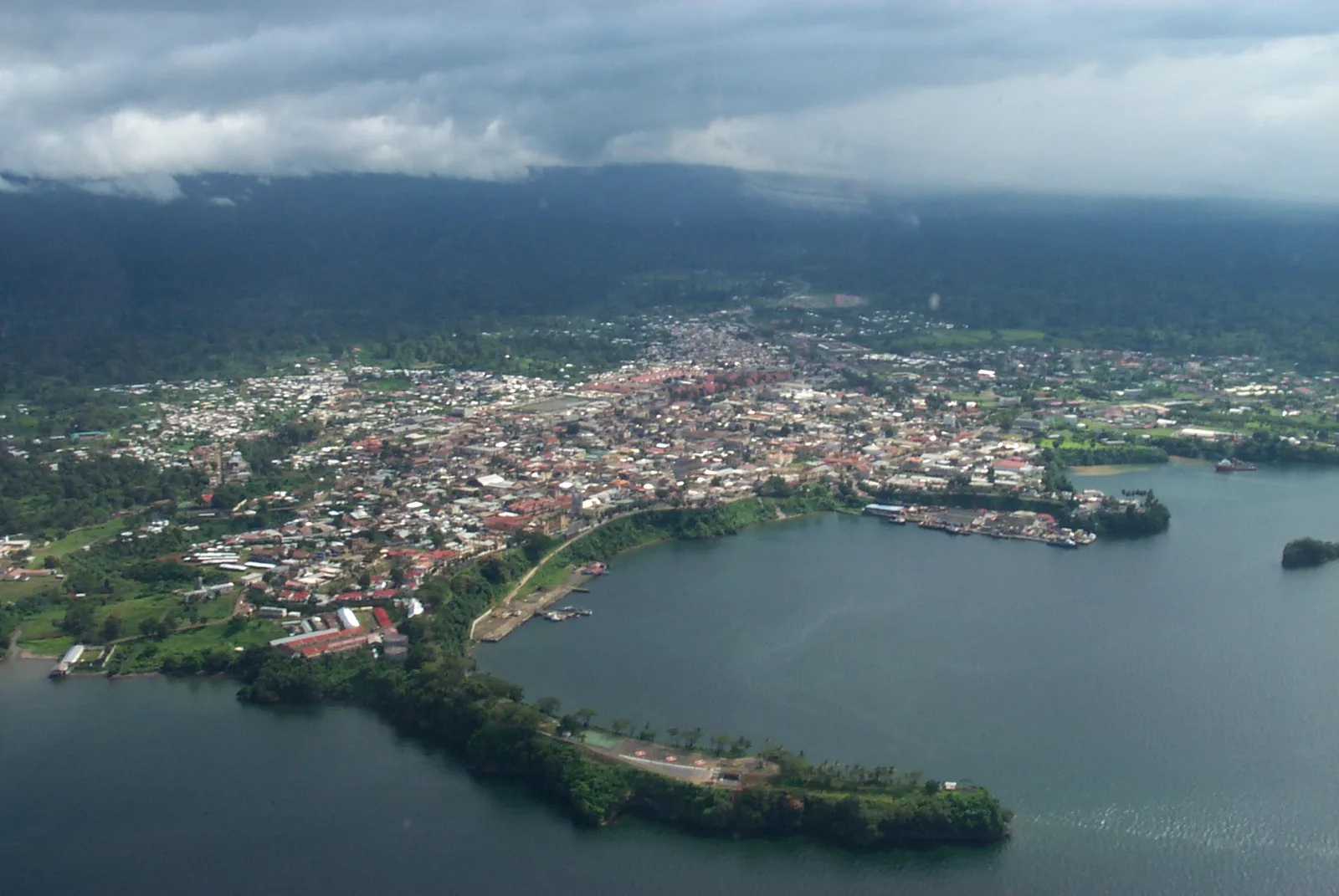
Cost of Living in Equatorial Guinea
Image credit: Ipisking at English Wikipedia
Purchasing Power vs. United States
Based on GDP per capita (PPP). Equatorial Guinea: $15,454/capita.
Cities in Equatorial Guinea
Income Category
GDP per Capita
Population
How Far Your Money Goes
Prices are 44% higher than the global benchmark (New York City = 100).
Child Education
Public-schooling rules are not sourced for Equatorial Guinea yet. Country-level enrollment, instruction-language, and homeschool notes will appear here once verified.
Childcare & Domestic Help
Nanny, housekeeper, and driver pricing is not yet sourced for Equatorial Guinea. We publish this section only when we can tie it to verified local samples or a clearly marked country fallback.
Healthcare
System strength, outcome signals, facility coverage, and self-pay visibility in Equatorial Guinea.
Method: country metrics come from public system indicators, facility coverage reflects mapped providers we can inventory, direct pricing only reflects observed self-pay pages, and relative care cost can fall back to broad cost-of-living healthcare indices. Sparse pricing does not imply sparse healthcare availability.
Healthcare system
LimitedCoverage looks thinner, doctor staffing is lighter, and households still pay a large share themselves weigh on this rating.
Public care
LimitedPublic coverage looks thinner, public funding looks lighter, and patients still shoulder a meaningful share of costs weigh on this rating.
Private care
LimitedThe tracked private-style network still looks thin and self-pay pricing transparency is still sparse weigh on this rating.
UHC coverage
49/100
2023
Physicians
0.15/1k
2022
Hospital beds
2.10/1k
2010
Out of pocket
66%
2023
Outcome signals
Life expectancy
63.9 yrs
2024
Maternal mortality
174/100k
2023
Neonatal mortality
26.3/1k
2024
International patient readiness
LimitedPrice transparency is still sparse and headline outcomes are less reassuring weigh on this rating.
Pricing transparency
LimitedPublished self-pay prices are scarce weigh on this rating.
Facility coverage
Self-pay pricing visibility
No verified self-pay prices are published for the tracked facilities in Equatorial Guinea yet.
This usually reflects low online price transparency rather than a lack of healthcare providers.
Notable facilities
System metrics: World Bank WDI · Updated 2026-09-01
Safety & Governance
Street Safety
Source: Numbeo where a city row is matched; otherwise World Bank WGI and country-level safety context.
Political Stability
World Bank WGI scale: -2.5 to +2.5.
Wages by Sector
| Sector | Median |
|---|---|
| Administrative & Support Services | — |
| Agriculture & Farming | — |
| Arts, Entertainment & Recreation | — |
| Construction | — |
| Education | — |
| Finance & Insurance | — |
| Healthcare & Social Work | — |
| Hospitality & Food Service | — |
| Information & Technology | — |
| Manufacturing | — |
| Mining & Quarrying | — |
| Other Services | — |
| Professional & Scientific Services | — |
| Public Administration & Defence | — |
| Real Estate | — |
| Retail & Wholesale Trade | — |
| Transport & Logistics | — |
| Utilities | — |
2024 annual wages in Equatorial Guinea · Source: GDP-derived estimate
Visa Information (US passport)
Short-stay entry
US passport holders need advance travel authorization or a visa before entry.
About Equatorial Guinea
Equatorial Guinea is a small upper-middle-income country in Sub-Saharan Africa, with Ciudad de la Paz as capital and most expat life still concentrated around Malabo and Bata. Costs are moderate to high by regional standards, partly because oil-sector wages shape expectations. Spanish is the main official language, with French and Portuguese also official, which makes it unusual in Central Africa but not especially easy for independent movers: visas are restrictive and usually need sponsorship. Relocators should take the climate and infrastructure seriously. It is hot and humid year-round with rainy seasons, healthcare is basic even in Malabo, serious cases may require evacuation, and internet can be slow, unreliable, and outage-prone. This is mainly a work-assignment destination, not an easy lifestyle move.
See the full breakdown — free
No password needed. Takes ~30 seconds.
Common questions about Equatorial Guinea
Sourced from SortaRich's public-data ranking engine — every figure links to its institutional source.
How much does it cost to live in Equatorial Guinea?
The cost of living in Equatorial Guinea is about 44% more expensive than the global benchmark (New York City), with an overall cost-of-living index of 144. SortaRich personalizes these numbers to your home city's purchasing power so the comparison is real, not nominal.
Sources: SortaRich Cost of Living, World Bank ICP 2021
How far does $1 go in Equatorial Guinea?
$1 goes about 2.5x further in Equatorial Guinea than in the baseline market — your home-country income stretches that much more (current PPP ratio: 2.45). The figure adjusts every year as exchange rates and local prices shift. SortaRich uses World Bank ICP 2021 as the anchor and Penn World Tables 11.0 for cross-validation.
Sources: World Bank ICP 2021, Penn World Tables 11.0
What visa do I need to move to Equatorial Guinea?
To move to Equatorial Guinea you have these visa options: Tourist entry: evisa. Visa rules change frequently — confirm the current terms with the official immigration authority before booking flights.
Source: SortaRich Visa Database
What are the best cities to live in Equatorial Guinea?
The best cities to live in Equatorial Guinea are Ciudad de la Paz — those are the most-searched options among the 1 cities profiled in the SortaRich database. Each city page includes a personalized PPP comparison versus your home city plus subnational price data where available.
Source: SortaRich City Index