
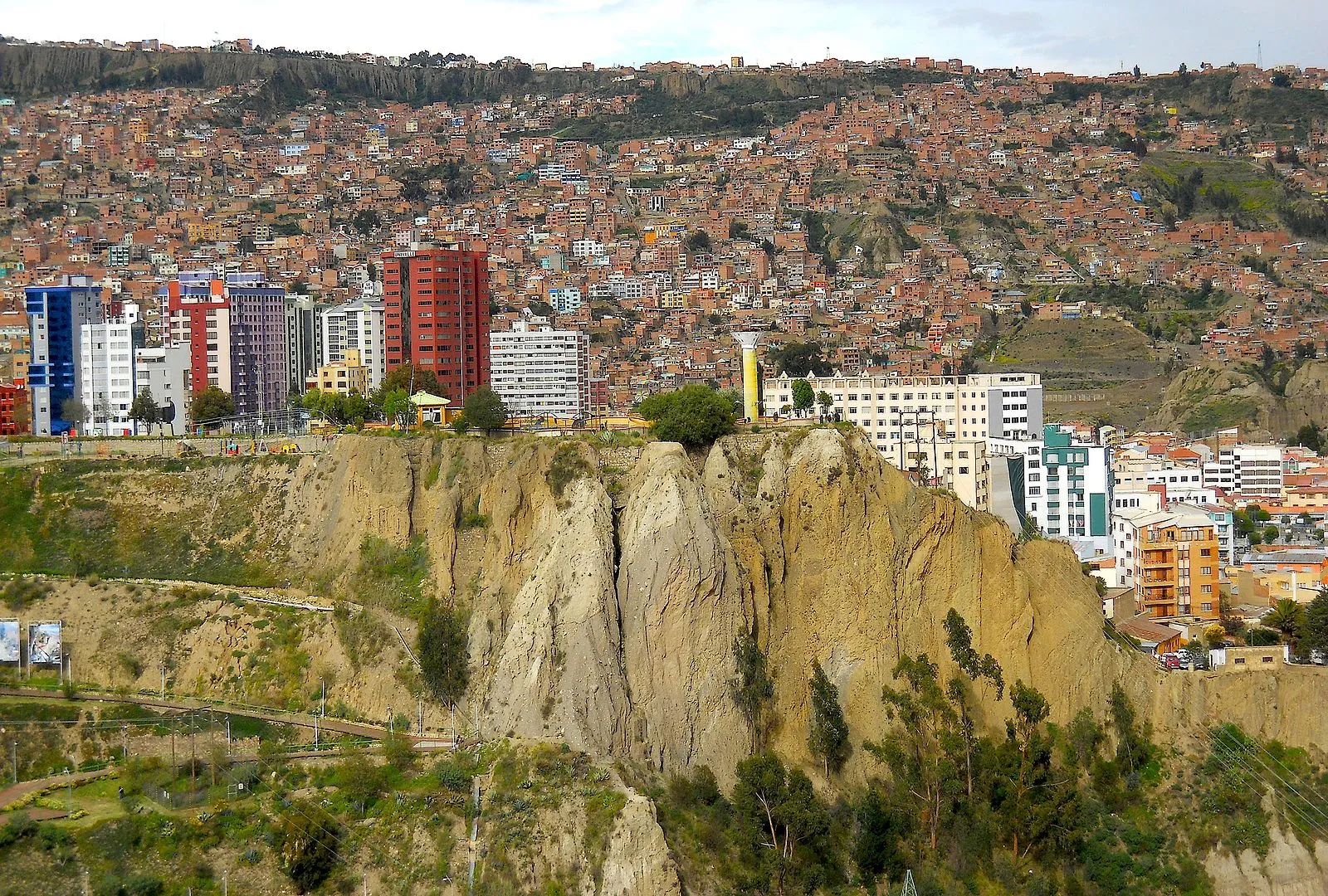
Cost of Living in Bolivia
Image credit: psyberartist
Purchasing Power vs. United States
Based on GDP per capita (PPP). Bolivia: $11,329/capita.
Cities in Bolivia
Income Category
Happiness
5.8 / 10
#72 globally
GDP per Capita
Population
How Far Your Money Goes
Prices are 71% lower than the global benchmark (New York City = 100).
Child Education
Public-school quality, expat access, instruction language, and homeschool legality for relocating families.
Public schools
How realistic the local public-school path is for a relocating family in Bolivia.
Quality
Limited public-school fit
Expat access
Resident families can use it
conditionalInstruction
Spanish
Language fit is more manageable.
PISA / outcomes
Qualitative only
Using curated quality notes for now.
Why this quality rating
Bolivia has one of the weaker public school systems in South America with significant infrastructure and quality gaps, especially outside major cities. Spanish (and indigenous language) medium.
Why the expat-access rating looks like this
Resident expat families can technically enroll in public schools, but quality concerns and language factors typically make private or international schools the practical choice in La Paz and Santa Cruz.
❓ Homeschooling
Not specifically regulatedBolivia requires compulsory education but does not have specific homeschooling legislation. School attendance laws are not strongly enforced. Some expat families in Sucre and La Paz homeschool without interference. No formal framework exists.
Homeschool legality in Bolivia — check current regulations before committing.
Source: User-curated family relocation research (initial seed) (2026-04-14)
Childcare & Domestic Help
Current city samples for the family-support costs we track in Bolivia.
Full-time nanny (5 days)
$425-$575
1 tracked city, not a national average
Live-in / 24-7 nanny
$775-$1,025
1 tracked city, not a national average
Source: curated family relocation research
Healthcare
System strength, outcome signals, facility coverage, and self-pay visibility in Bolivia.
Method: country metrics come from public system indicators, facility coverage reflects mapped providers we can inventory, direct pricing only reflects observed self-pay pages, and relative care cost can fall back to broad cost-of-living healthcare indices. Sparse pricing does not imply sparse healthcare availability.
Healthcare system
LimitedHospital capacity looks tighter, headline outcomes are weaker, and maternal outcomes are weaker weigh on this rating.
Public care
MixedA visible public hospital footprint help, but country-level outcomes are weaker.
Private care
GoodA large tracked hospital and clinic network and a clearly private facility base help, but self-pay pricing transparency is still sparse.
UHC coverage
67/100
2023
Physicians
1.28/1k
2021
Hospital beds
1.49/1k
2023
Out of pocket
27%
2023
Outcome signals
Life expectancy
68.7 yrs
2024
Maternal mortality
146/100k
2023
Neonatal mortality
7.3/1k
2024
International patient readiness
MixedA visible private hospital base and multiple facilities have websites help, but price transparency is still sparse and headline outcomes are less reassuring.
Pricing transparency
LimitedMultiple facilities have crawlable websites help, but published self-pay prices are scarce.
Facility coverage
Self-pay pricing visibility
No verified self-pay prices are published for the tracked facilities in Bolivia yet.
This usually reflects low online price transparency rather than a lack of healthcare providers.
Notable facilities
System metrics: World Bank WDI · Updated 2026-09-01
Safety & Governance
Street Safety
Source: Numbeo where a city row is matched; otherwise World Bank WGI and country-level safety context.
Political Stability
World Bank WGI scale: -2.5 to +2.5.
Wages by Sector
| Sector | Median |
|---|---|
| Administrative & Support Services | — |
| Agriculture & Farming | — |
| Arts, Entertainment & Recreation | — |
| Construction | — |
| Education | — |
| Finance & Insurance | — |
| Healthcare & Social Work | — |
| Hospitality & Food Service | — |
| Information & Technology | — |
| Manufacturing | — |
| Mining & Quarrying | — |
| Other Services | — |
| Professional & Scientific Services | — |
| Public Administration & Defence | — |
| Real Estate | — |
| Retail & Wholesale Trade | — |
| Transport & Logistics | — |
| Utilities | — |
2024 annual wages in Bolivia · Source: ILO ILOSTAT
Visa Information (US passport)
Short-stay entry
US passport holders can obtain a visa on arrival.
About Bolivia
Bolivia is a lower-middle-income country of 12,413,315 people where relocation math is hard to ignore: a comfortable lifestyle can run about $800-1,200 a month, placing it well below much of the Latin America and Caribbean region. La Paz and Santa Cruz are the practical anchors for newcomers because healthcare is adequate there, while services become more limited outside major cities. Spanish is the main working language, but Quechua and Aymara matter in daily life and public culture. The 90-day renewable tourist visa is useful for testing the fit before committing. The tradeoff is infrastructure: internet can be inconsistent, often 5-15 Mbps outside cities, utilities may require patience, and petty crime in urban areas is a real consideration. Climate also splits sharply between cool, dry Andean areas and humid, rainy Amazon zones.
See the full breakdown — free
No password needed. Takes ~30 seconds.
Common questions about Bolivia
Sourced from SortaRich's public-data ranking engine — every figure links to its institutional source.
Is Bolivia a good country to live in?
Bolivia is a moderately rated country to live in per the World Happiness Report (5.8 of 10, ranking #72 globally). Whether it's right for you depends on your priorities — use SortaRich's free quiz to see how Bolivia ranks for your specific income, family, and visa profile.
Sources: World Happiness Report, SortaRich Methodology
How much does it cost to live in Bolivia?
The cost of living in Bolivia is about 71% cheaper than the global benchmark (New York City), with an overall cost-of-living index of 29. SortaRich personalizes these numbers to your home city's purchasing power so the comparison is real, not nominal.
Sources: SortaRich Cost of Living, World Bank ICP 2021
How far does $1 go in Bolivia?
$1 goes about 4.7x further in Bolivia than in the baseline market — your home-country income stretches that much more (current PPP ratio: 4.66). The figure adjusts every year as exchange rates and local prices shift. SortaRich uses World Bank ICP 2021 as the anchor and Penn World Tables 11.0 for cross-validation.
Sources: World Bank ICP 2021, Penn World Tables 11.0
What visa do I need to move to Bolivia?
To move to Bolivia you have these visa options: Tourist entry: visa_on_arrival. Visa rules change frequently — confirm the current terms with the official immigration authority before booking flights.
Source: SortaRich Visa Database
What are the best cities to live in Bolivia?
The best cities to live in Bolivia are La Paz, Sucre — those are the most-searched options among the 2 cities profiled in the SortaRich database. Each city page includes a personalized PPP comparison versus your home city plus subnational price data where available.
Source: SortaRich City Index