
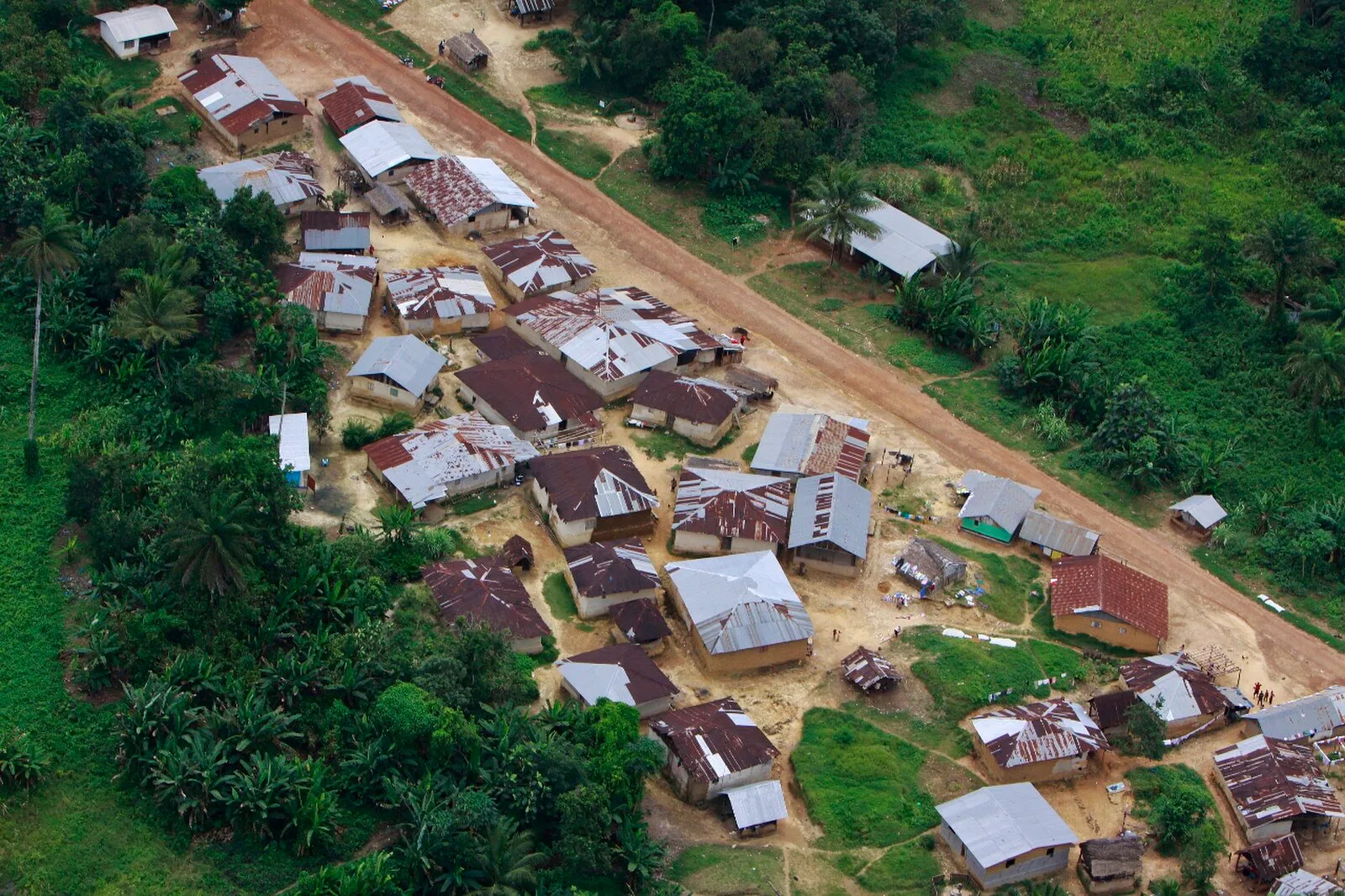
Cost of Living inMonrovia, Liberia
Image credit: blk24ga
Purchasing Power vs. United States
Based on GDP per capita (PPP). Liberia: $1,646/capita.
Income Category
Happiness
4.3 / 10
#119 globally
GDP per Capita
City Population
Child Education
International and private school tuition + curriculum mix for relocating families.
International & private schools
Childcare & Domestic Help
Nanny, housekeeper, and driver pricing is not yet sourced for Monrovia. We publish this section only when we can tie it to local job-board, agency, or country fallback evidence.
Getting Around
Neighborhood mobility profiles are rolling out city by city.Monrovia is still missing a verified walkability, transit, airport, and rideshare profile.
Healthcare
System strength, outcome signals, facility coverage, and self-pay visibility in Liberia.
Method: country metrics come from public system indicators, facility coverage reflects mapped providers we can inventory, direct pricing only reflects observed self-pay pages, and relative care cost can fall back to broad cost-of-living healthcare indices. Sparse pricing does not imply sparse healthcare availability.
Healthcare system
LimitedCoverage looks thinner, doctor staffing is lighter, and households still pay a large share themselves weigh on this rating.
Public care
LimitedPublic coverage looks thinner, public funding looks lighter, and patients still shoulder a meaningful share of costs weigh on this rating.
Private care
MixedA meaningful tracked hospital and clinic network and a clearly private facility base help, but self-pay pricing transparency is still sparse.
UHC coverage
49/100
2023
Physicians
0.18/1k
2022
Hospital beds
1.59/1k
2021
Out of pocket
63%
2023
Outcome signals
Life expectancy
62.3 yrs
2024
Maternal mortality
628/100k
2023
Neonatal mortality
32.9/1k
2024
International patient readiness
LimitedA visible private hospital base help, but price transparency is still sparse and headline outcomes are less reassuring.
Pricing transparency
LimitedPublished self-pay prices are scarce and few facilities expose web pages we can verify weigh on this rating.
Facility coverage
Self-pay pricing visibility
No verified self-pay prices are published for the tracked facilities in Liberia yet.
This usually reflects low online price transparency rather than a lack of healthcare providers.
Notable facilities
System metrics: World Bank WDI · Updated 2026-09-01
Safety & Governance
Street Safety
Source: Numbeo where a city row is matched; otherwise World Bank WGI and country-level safety context.
Political Stability
World Bank WGI scale: -2.5 to +2.5.
Wages by Sector
| Sector | Median |
|---|---|
| Administrative & Support Services | — |
| Agriculture & Farming | — |
| Construction | — |
| Education | — |
| Finance & Insurance | — |
| Healthcare & Social Work | — |
| Hospitality & Food Service | — |
| Information & Technology | — |
| Manufacturing | — |
| Mining & Quarrying | — |
| Other Services | — |
| Professional & Scientific Services | — |
| Public Administration & Defence | — |
| Retail & Wholesale Trade | — |
| Transport & Logistics | — |
2017 annual wages in Monrovia, Liberia · Source: ILO ILOSTAT (national)
Price Comparison vs. US
Visa Information (US passport)
Short-stay entry
US passport holders need advance travel authorization or a visa before entry.
Quick comparison FAQ
Structured from the deltas already shown on this page — no invented facts, no extra data sources.
How far does your money go in Monrovia compared with the US?
Your money goes about 2.3x further in Monrovia than in the US, based on the current PPP estimate.
What quality-of-life signal do we have for Monrovia?
The quality-of-life signal for Monrovia is the World Happiness Report score for Liberia — 4.3 (ranking #119 globally) in the latest available national data, which gives a rough national-level read for Monrovia.
About Monrovia
Monrovia is the capital of Liberia, an Atlantic coastal city of about 1.54 million that serves as the country's political, financial, and port-and-shipping core. The economy leans on the port, rubber and iron-ore exports, and an outsized NGO and development-aid sector that drives much of the formal expatriate presence. Relocators should weigh a tropical climate with one of the wettest rainy seasons in West Africa (roughly May to October), infrastructure that remains weak after two civil wars and the 2014 Ebola crisis, and chronic power shortages that make private generators standard. English is the official language, security advisories from Western governments are moderate rather than extreme, and most international staff live in a few clustered neighborhoods like Mamba Point and Sinkor.
See the full breakdown — free
No password needed. Takes ~30 seconds.